The 80 Endings

Here is something no one talks about at the milonga:
the last eight seconds of every song are a small public audit of your dancing.
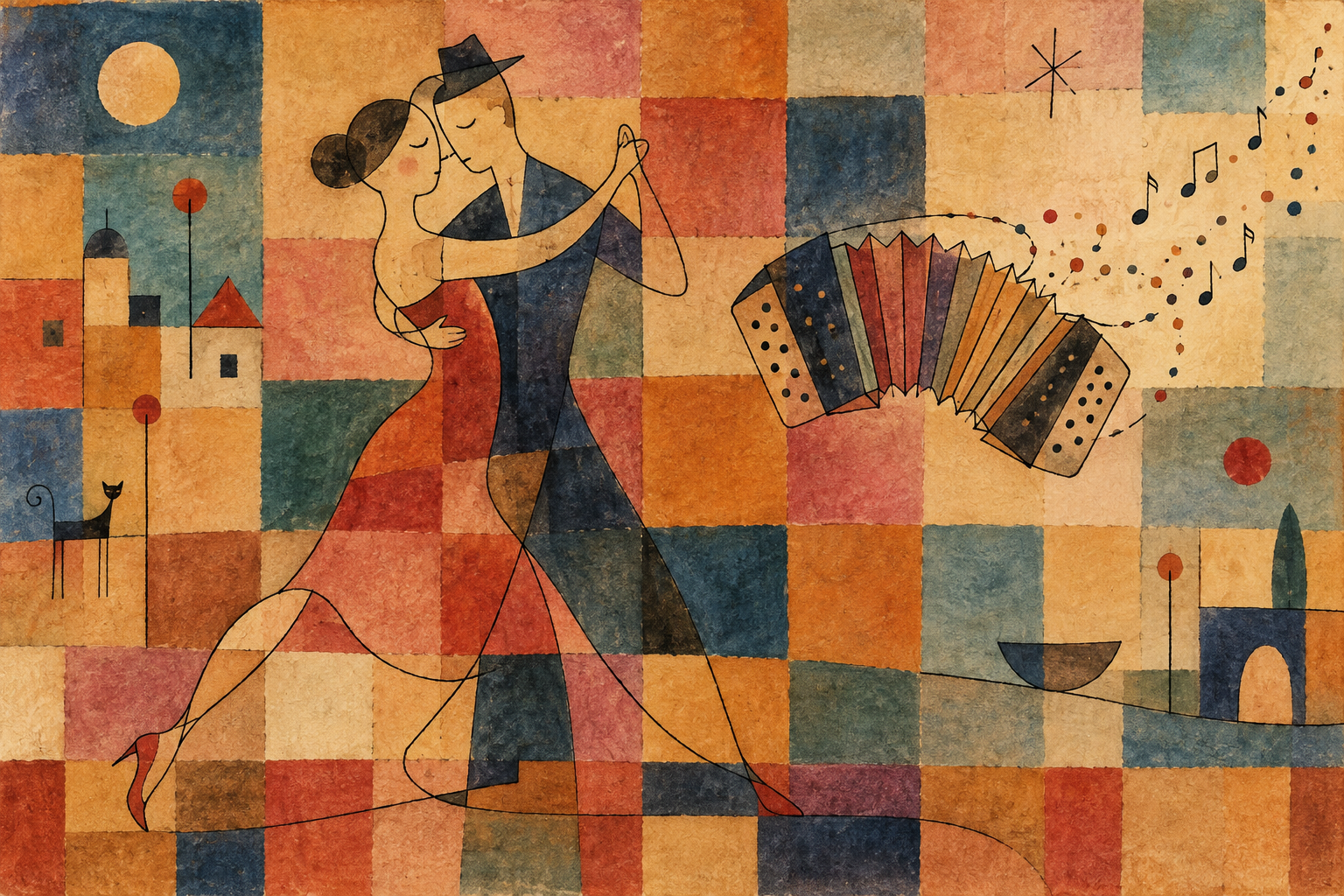
Visual created by Anita Flejter with the use of generative AI tools, inspired by the atmosphere and emotion of Argentine Tango and Paul Klee’s paintings.
You know the moment. The bandoneón swells, the phrase resolves, and somewhere around bar two of the finale (maybe exactly there, maybe two bars too late) you realize the song is ending. Under you. Right now. What happens next depends on luck and habit. Sometimes you land it: a clean weight change, a small flourish, the two of you arriving at the final note together like you planned it. More often there is a small scramble. A rushed step. The awkward micro-shrug that says well, that's over, half a beat before the music agrees with you.
Nobody teaches you this. In years of classes, hundreds of them, from local teachers and festival maestros alike, almost no one teaches the ending. We learn how to begin a dance and how to survive the middle. The ending, which is the only part of the song the entire room watches you do, is left to chance. And to the micro-shrug.
Then a man from Toledo did the arithmetic no one else thought to do.
The Number
Steve Darmo went to a milonga and counted.
In a typical four-hour milonga you dance roughly twenty tandas. Four songs each. That is 80 endings a night.
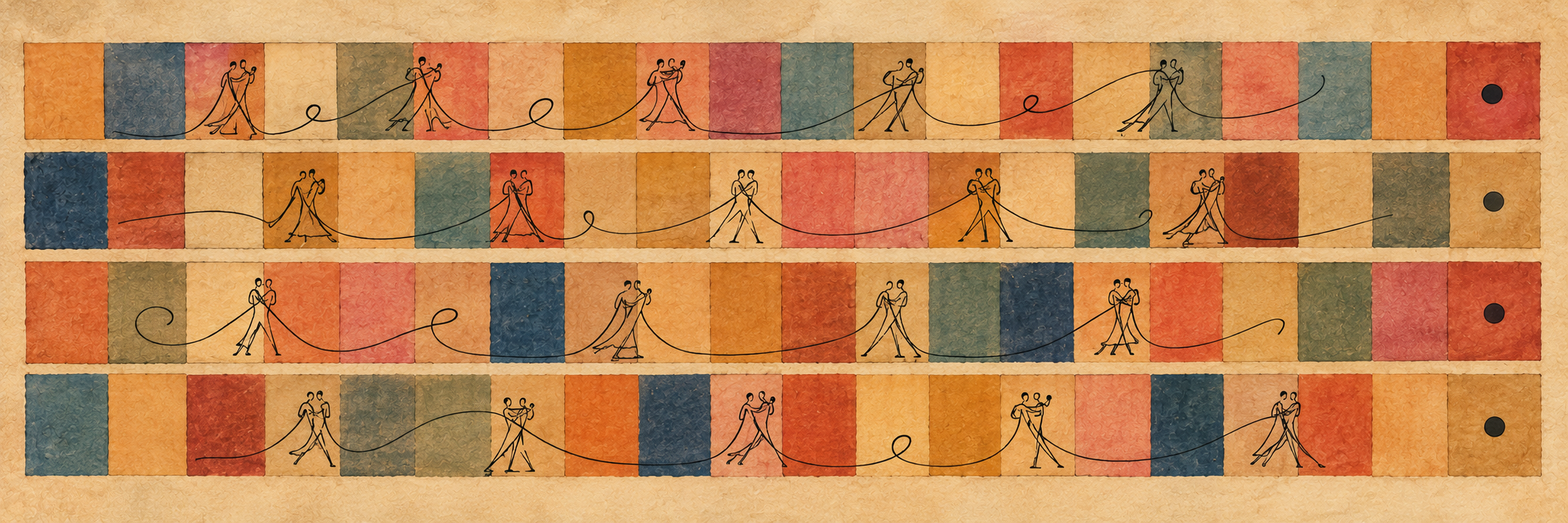
Visual created by Anita Flejter with the use of generative AI tools, inspired by the atmosphere and emotion of Argentine Tango and Paul Klee’s paintings.
Eighty chances to land something. Or eighty small scrambles, multiplied by every milonga you have ever danced. (Please do not actually do that multiplication. I did. It was not good for my self-esteem.)
He put it exactly this way: in the four-hour milonga, you have 80 endings. Not 80 songs. 80 endings. As if the endings were the unit that mattered. Once you hear the number, you cannot unhear it.
Because he is right. We remember the endings, and psychologists have a name for it: the peak-end rule. In a well-known 1993 study led by Daniel Kahneman, people held a hand in painfully cold water for 60 seconds. In a second trial they held it for 90 seconds, but the last 30 were slightly less cold. Asked which one they would rather repeat, most chose the longer one. More total discomfort, better ending. Memory does not keep a running average. It keeps the highlight and the last note.
The milonga works the same way, with less ice water and more Pugliese. The last note of the last song of the tanda is the image that walks back to the table with you. It is the difference between a partner saying "that was lovely" and meaning it, and saying it as a polite exit. Steve put it bluntly in an essay on why endings matter: misconnect in the middle and you can recover, but misconnect at the end and "the errors will be magnified ten-fold." And we spend exactly zero hours of class time on it.
The Engineer Who Felt the Gap
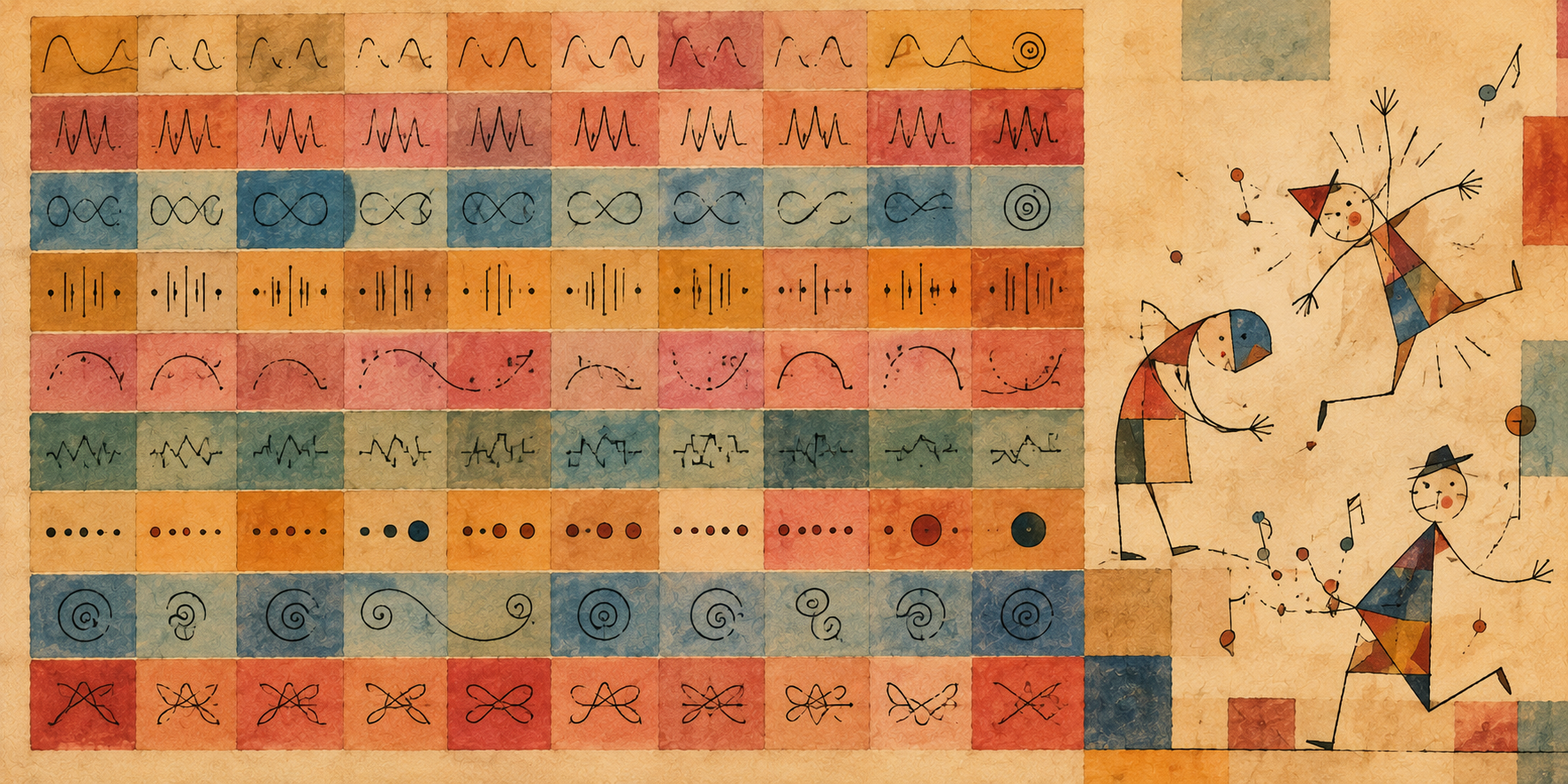
Visual created by Anita Flejter with the use of generative AI tools, inspired by the atmosphere and emotion of Argentine Tango and Paul Klee’s paintings.
Steve Darmo is an engineer. This explains a lot.
Faced with a problem (songs end, dancers are surprised by it, no one teaches it), he did not shrug and keep dancing.
Most of us, faced with a recurring problem in tango, buy new shoes. Steve spent three years listening to 1,700 recordings from the Golden Age orchestras and classified how every one of them finishes.
Nine common types cover almost everything. Three more break the rules, and he named them like the scoundrels they are: the Oddball, the Surprise, and the Fake. (The Fake is the musical version of a friend who says "one last thing" at the door and then tells you three more.)
When he started, he thought the answer would be steps: which figures fit which endings. After three years he concluded the answer is ears.
The ending is not a surprise. It is announced, usually several bars early, and every orchestra announces it differently.
D'Arienzo telegraphs. Di Sarli lands like a closing door. Troilo devastates you with restraint. Pugliese makes you wait for it. Vals endings work differently from tango endings, which catches almost everyone, every time, including people who swear it will not happen to them. (Hello.)
Music psychology is on his side. In Sweet Anticipation, musicologist David Huron argues that listening is a constant act of prediction: the brain is always guessing what comes next, and much of the pleasure of music comes from those guesses being confirmed, delayed or playfully broken. Few things in music are as conventional, and therefore as predictable, as the way a phrase closes. The announcement is not in your imagination. It is how music and brains work together.
Then he wrote the book: Tango Endings, which, as far as we can find, is the only published book on the subject. And then, being an engineer, he wrote a second one about the other side of the booth, The Ultimate Tango DJ Handbook, because once you have classified the endings, you start noticing who is playing them and why. And quietly judging the DJ. Mostly quietly.
If you want a preview of his nine types, we wrote about them here: How to predict tango endings according to Steve Darmo.
Recognition, Not Arithmetic
Here is the part I love, and the part that will keep some of you from signing up for the wrong reason.
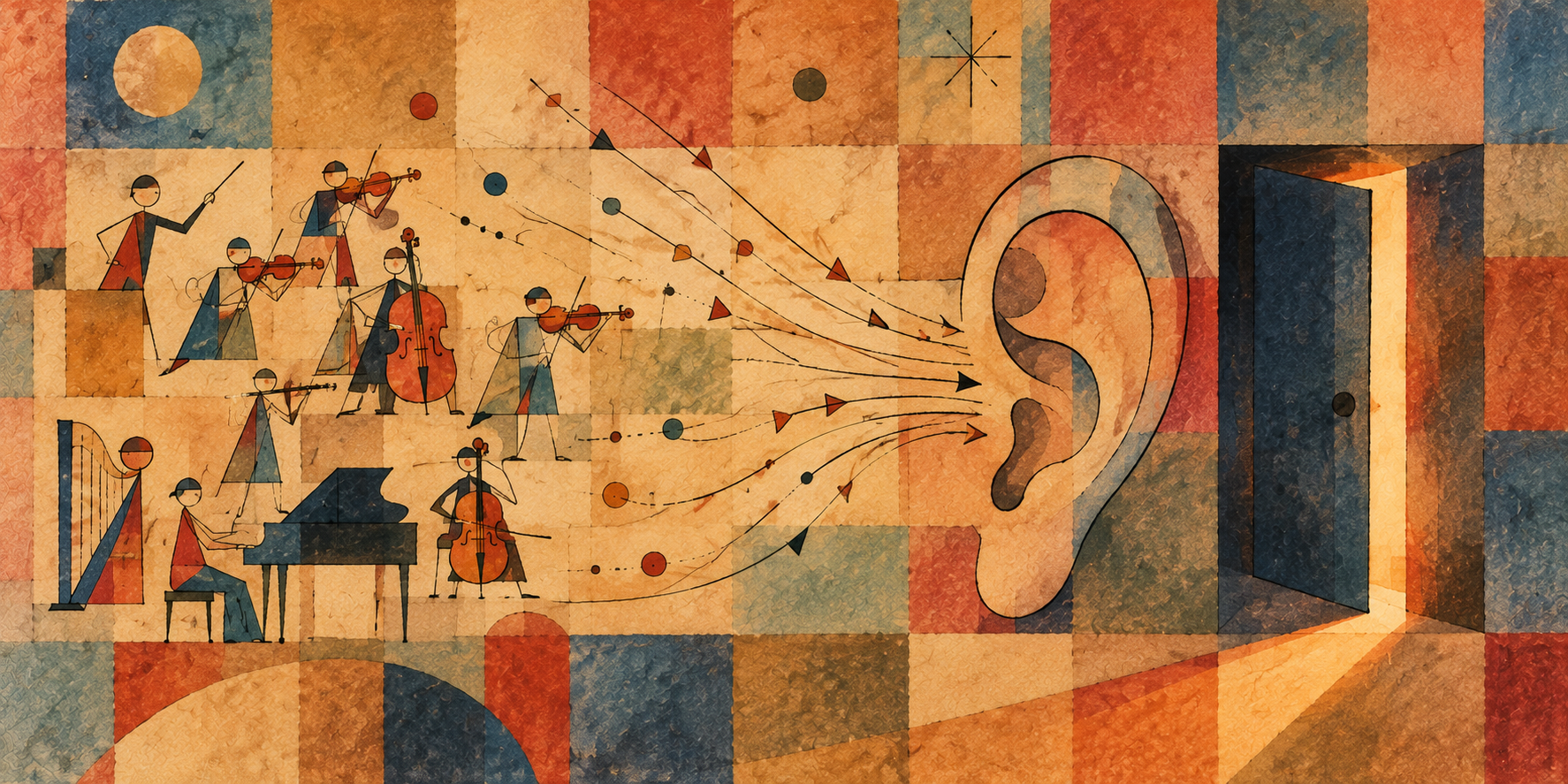
Steve does not count while he dances, and he is not asking you to. If the method were arithmetic (listen for the four-bar phrase, subtract the chord progression, execute figure 7), it would be useless. Nobody has that kind of bandwidth in an embrace. Most of us are busy enough remembering which foot we are on. The point of the research runs the opposite direction: once you know what the nine endings sound like, you stop computing and start recognizing.
The announcement was always there. You have heard it ten thousand times. You just never knew you were hearing it.
Visual created by Anita Flejter with the use of generative AI tools, inspired by the atmosphere and emotion of Argentine Tango and Paul Klee’s paintings.
And there is a second failure, worse than not hearing the ending at all. Sometimes you hear it perfectly. You know exactly which chord is coming, you have the perfect closing step loaded and ready, and your partner hears it too, and imagines something entirely different. The last four bars become a negotiation nobody agreed to have: you step, they counter-step, and the connection that held for three beautiful minutes dissolves precisely when it matters most.
The scramble is not always about the music. Sometimes it is about two people who both heard the door closing and reached for two different doors.
A shared vocabulary fixes this the way shared vocabulary fixes everything in tango: not by making you identical, but by giving you a common language for the moment that used to be guesswork.
This is the difference between learning and being told. The knowledge was already in your body. Every dancer has absorbed these endings osmotically, the same way you absorbed your native language. That is more than a nice metaphor: a widely cited 2006 review in Cognition by Emmanuel Bigand and Bénédicte Poulin-Charronnat concluded that people with no musical training build a surprisingly sophisticated sense of musical structure just by listening, and in many tasks respond much like trained musicians. What Steve teaches is not new information. It is pointing. That. That chord. That is the door closing. Afterward you will hear it everywhere, the way you hear your own name across a noisy room. (That one has a name too: the cocktail party effect. We would call it the milonga effect, but nobody asked us.)
He told a fellow dancer once that he was writing about endings, and the man called it minutiae.
The last two notes of a three-minute song, how important can they be? But tango dancers are minutiae people.
We fly to festivals, take hundreds of hours of classes, and practice sequences we will execute perhaps once in ten milongas, waiting for the stars, the floor and the line of dance to align. The ending, by contrast, arrives on every single song: unmissable, unskippable, and entirely unpracticed. Of all the minutiae we obsess over, this is the only kind that happens eighty times a night.
The Weekend
Visual created by Anita Flejter with the use of generative AI tools, inspired by the atmosphere and emotion of Argentine Tango and Paul Klee’s paintings.
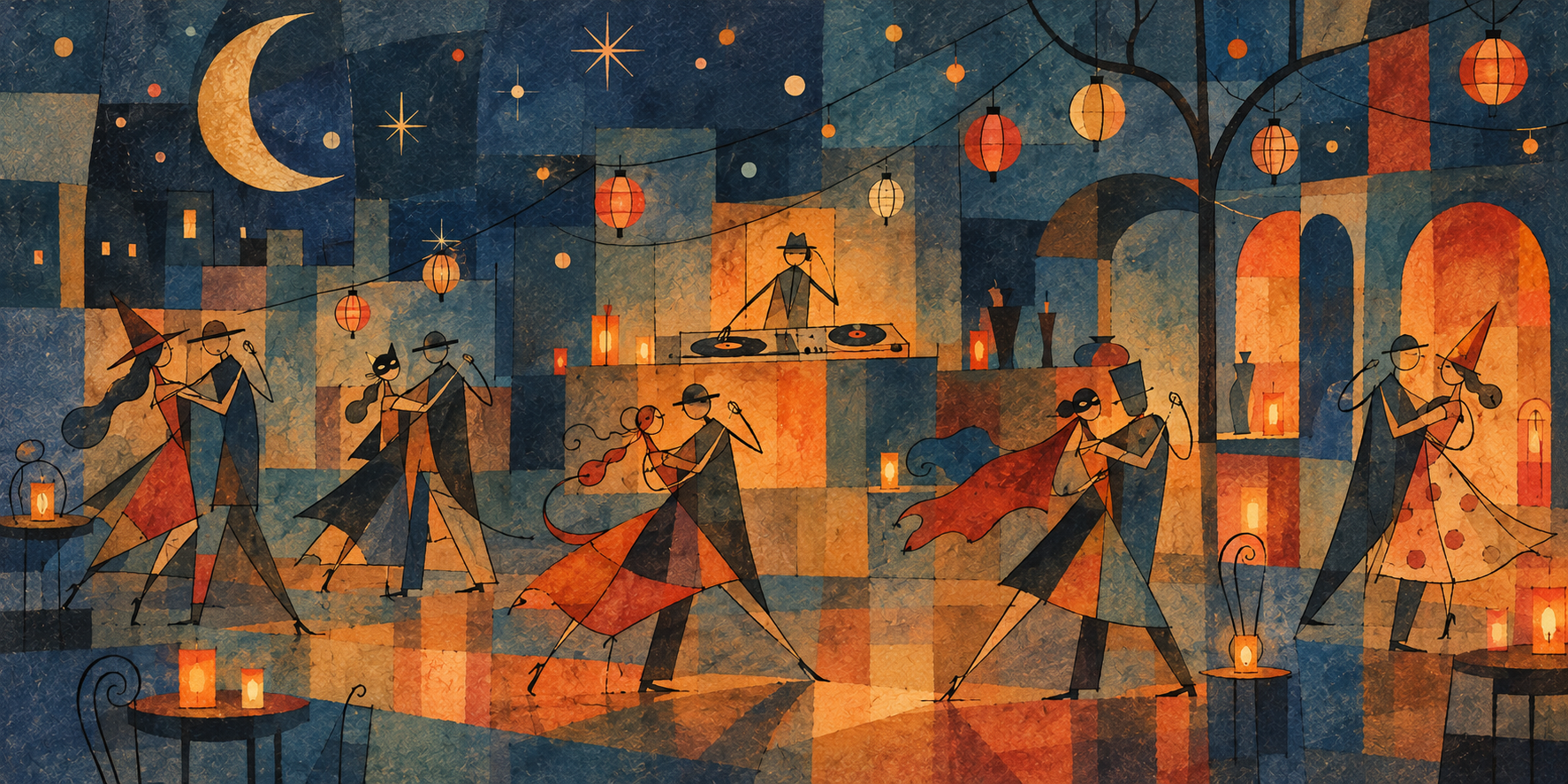
So he is coming to Malden. Here is the full weekend.
Friday, October 30. At 6:00pm Steve teaches Tango DJ Fundamentals: what makes a tanda hold together, how cortinas work, how you read a room and shape four hours of energy while it keeps changing underneath you. No dance level required. At 8:00 comes his talk, Things You Have Danced a Hundred Times: forty-five minutes on what these songs are actually about and what was happening in the room when they were recorded. Non-dancers welcome. Then, at 9:00, the milonga, which happens to be my birthday milonga, the 1000/20, with Steve behind the decks. A man who listened to 1,700 tangos to find nine endings is DJing my birthday party. I could not have invented a better gift. (Speaking of gifts: none expected, but if you insist, it has to divide into 1000. The dress code is two colors, split half and half. Yes, there is a theme, and yes, it involves math.)
Saturday, October 31. The two workshops the whole weekend exists for. At 11:30am, Tango Endings I: Hearing It Coming: the signatures of the Big Four and how to recognize the close before it closes. At 1:00pm, Tango Endings II: Landing It: everyone past the Big Four, the vals endings that catch you, and the Oddball, the Surprise, and the Fake. Then Che Tango Practica runs from 3:00 to 6:00 with Steve simply in the room. Not teaching. Available. This is the part people skip and then regret: three hours to try the endings while they are still fresh, with the man who wrote the book standing next to the floor. The practica is included with either workshop. Costumes welcome, by the way. It is Halloween. (At the practica, that is. The milonga the night before belongs to the two-color rule.)
Pre-intermediate and up. No partner needed, we rotate. Early bird pricing runs through Sunday, October 18 at 11:59pm, and it is the kind of weekend where the answer to "should I do one workshop or both?" is both. The Weekend Pass covers both workshops, the talk and the milonga, plus 50% off Steve's online course, Tango Secrets: Tango Endings, for anyone who wants to keep practicing at home. Steve also has a few private lesson slots on Friday afternoon and Sunday, November 1 (email ultimatetango@gmail.com). Register here.
The Real Reason
I will be honest about why I wanted him here.
Eighty endings a night means the ending is not the fringe of the dance. It is most of its punctuation, the period at the end of every sentence you dance. And we have all been improvising our punctuation.
Come learn the language your body already half-knows. The music has been telling you this for years. This October, for once, let it finish its sentence.
Visual created by Anita Flejter with the use of generative AI tools, inspired by the atmosphere and emotion of Argentine Tango and Paul Klee’s paintings.
Sources:
Kahneman, D., Fredrickson, B. L., Schreiber, C. A., and Redelmeier, D. A. (1993). "When More Pain Is Preferred to Less: Adding a Better End." Psychological Science. Summary: Peak-end rule
Huron, D. (2006). Sweet Anticipation: Music and the Psychology of Expectation. MIT Press.
Bigand, E., and Poulin-Charronnat, B. (2006). "Are we 'experienced listeners'? A review of the musical capacities that do not depend on formal musical training." Cognition, 100, 100 to 130.
Cocktail party effect, including Moray's 1959 finding that people notice their own name in a conversation they are not attending to.
Darmo, S. (2018). "Why the Endings Are Important in Tango." International Tango Machine.
Darmo, S. The Ultimate Tango DJ Handbook: Over 1,000 Tandas for Social Dancing.