
The Follower's Mind: Why Tango Is Not a Lead-and-Obey Dance

Tango is described as a conversation between two people. What that description leaves out is that the follower's side of the conversation is at least as complex as the leader's, and in some ways more so. Following is not the space left behind by a lead. It is its own full-time job, with its own skill set, its own decision tree, and its own creative territory.
If you are a follower, or a leader who wants to understand what is happening on the other side of the embrace, this is where to start.
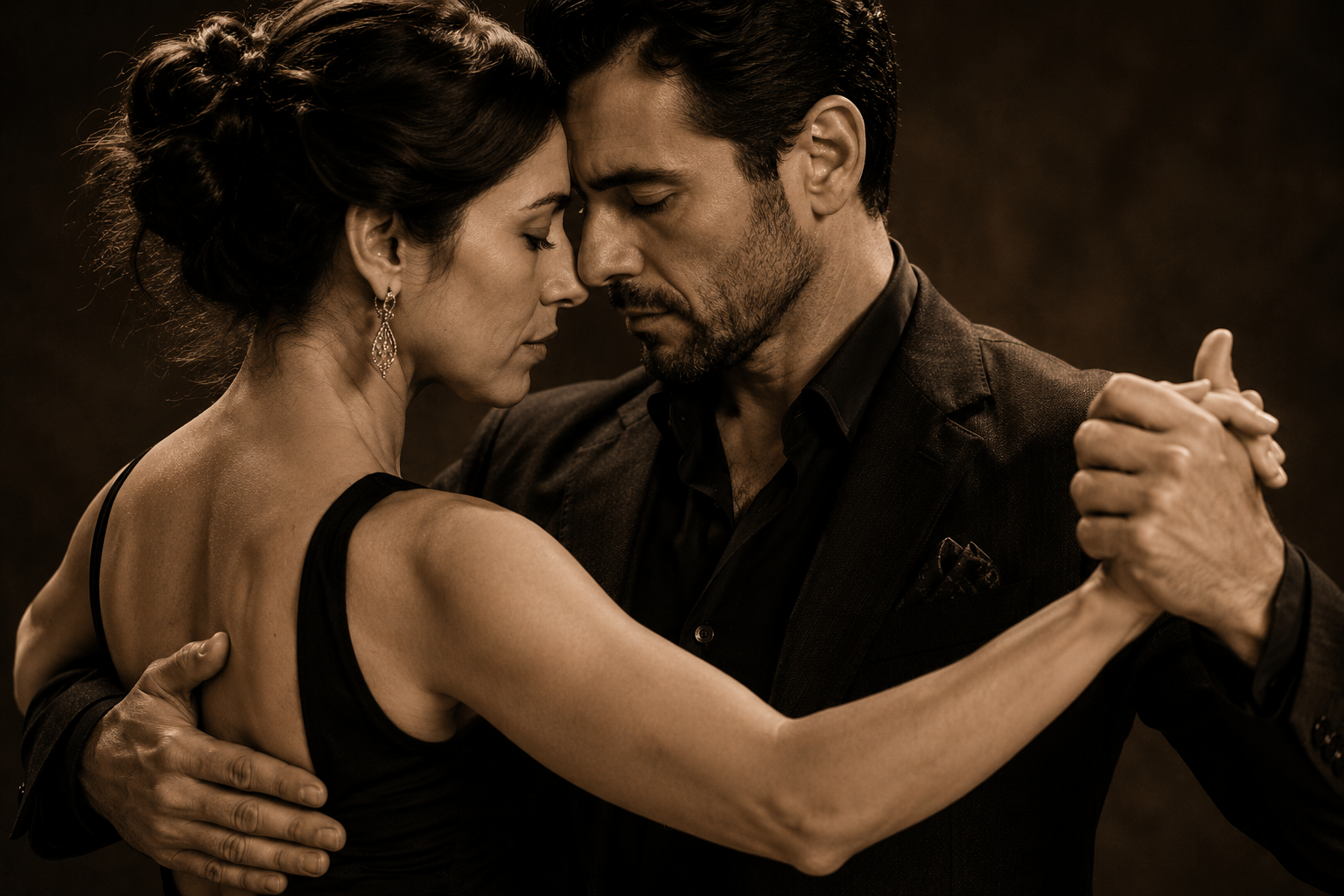
Visual created by Anita Flejter with the use of generative AI tools, inspired by the atmosphere and emotion of Argentine tango.
The Follower Is Not Waiting. They Are Listening.
Followers are usually told to wait: wait for the lead, wait to be moved, wait to understand what the leader intended. This makes following sound like patience. It is not.
Every lead arrives at the follower's body as information, not instruction. The follower receives that information, a shift in shared weight, a change in the leader's axis, a micro-torque in the embrace, and decides how to respond. That decision happens faster than conscious thought. It happens in the nervous system, in the muscles that adjust balance before the brain has finished naming what just occurred.
A good follower cannot be manufactured from obedience.
This is why a good follower cannot be manufactured from obedience. Obedience is too slow. By the time a follower thinks "I was led to step forward," the moment has passed. The actual response is pre-cognitive. It is proprioceptive. It is the body solving a physics problem before the mind catches up.
The follower is an interpreter, not a guesser.
The follower is an interpreter, not a guesser. A well-attuned follower, one who is tuned to herself and to the leader, experiences something close to silent agreement in the exchange: a mutual, unspoken understanding that lives in the body without ever being named. It is pleasurable to both. Not because of any single step, but because two people are listening on the same frequency and choosing to move together.
What to feel in class: Are you guessing what the leader wants, or are you responding to what is actually happening? Guessing feels like anticipation: you start moving before the information arrives. Responding feels like you are inside the movement as it unfolds, with space to shape it. Reacting is something else entirely. It happens after the fact, when the moment has already passed and you have no choice. Reacting feels like panic. Responding happens while something is occurring, and a present follower can even modify or influence what is happening, not by resisting, but by participating fully in the shared physics. If you are guessing, you are dancing alone. If you are reacting, you are catching up. If you are responding, you are dancing together.
Two Roles, One System
Both roles in tango carry distinct technical demands. The leader initiates direction and movement. The follower receives, interprets, and completes. That division sounds simple. It is not.
At any given moment: the follower is maintaining a shared axis, managing the geometry of individual figures and elements, absorbing and reinterpreting the torsion in a pivot, preserving the structural integrity of the embrace while their body moves through asymmetrical positions. These are specific technical responsibilities. Understanding them does not diminish what the leader brings. It illuminates what the partnership actually requires from both people.
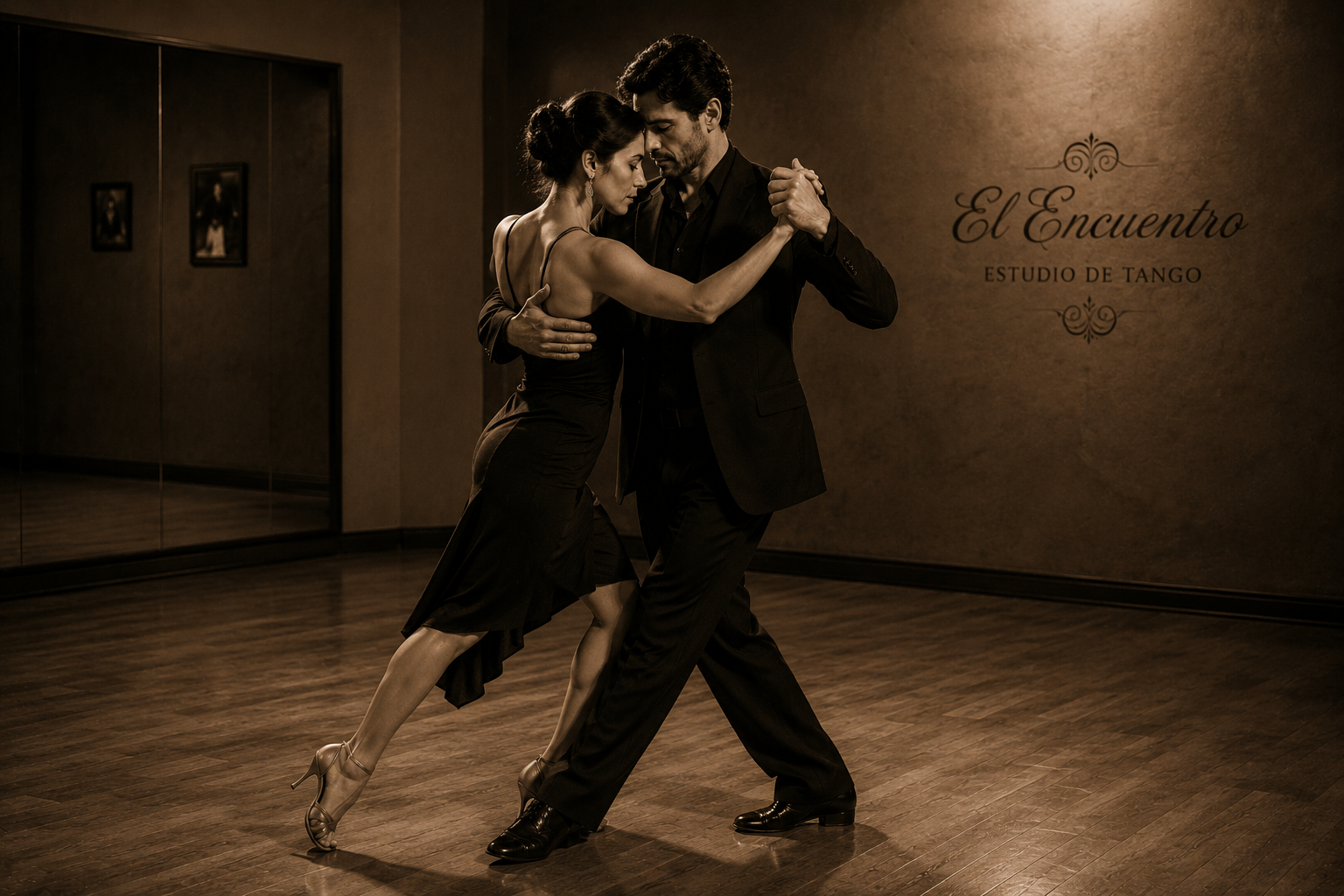
Visual created by Anita Flejter with the use of generative AI tools, inspired by the atmosphere and emotion of Argentine tango.
The cross is a clear example of how both sides work together. The leader steps outside the follower's right side, creating an angle and an invitation. The follower recognizes that angle, steps with the left foot crossing in front, protects the shared balance, and, in some cases, re-establishes the parallel system once the step lands. Neither partner completes the cross alone. The leader provides the geometry. The follower inhabits it, with a specific set of decisions made in real time.
The follower is not being placed. They are completing the other half of a movement that only exists when both halves arrive.
What to feel in class: In a cross, who is holding the structure after the step lands? If the shared axis breaks on landing, something in the handoff needs attention. A clean cross feels like both bodies settle into a new configuration together, as if the floor tilted slightly and you both adjusted to gravity. The leader creates the invitation. The follower completes the arrival. Both are necessary.
Transitions Are the Dance, Not the Arrival Points
Tango is often taught as a series of connected points, or positions: the cross, the ocho, the medialuna. But the dance does not function like a connect-the-dots exercise. It does not live in the positions. It lives in the transitions, the moment when a leg shifts from free to standing, when weight transfers through the floor, when the axis reconstitutes itself in a new place.
If the follower can perceive it - EVERYTHING CHANGES. The leader initiates the movement, but the follower is the one whose weight travels in response, whose weight must commit, whose body must reorganize around a new standing leg while the old one releases. That transition is not empty space between steps. It is where balance is negotiated, where the embrace breathes, where the music either enters the body or leaves it.
The instant between, when weight is neither fully here nor fully there, is where the follower is most vulnerable and most powerful. A rushed transition means the follower never committed to the previous axis. A delayed transition means the follower is still negotiating the old position while the next movement has already begun. A clean transition means the follower trusted the floor, trusted her own structure, and trusted the shared system enough to let one leg go and allow the other to take over completely.
This is where technical precision becomes something more than mechanics. The follower is feeling the physics of two bodies in continuous renegotiation, and choosing to move through the uncertain middle rather than holding on to the certainty of arrival.
What to feel in class: Can you sense the exact instant your free leg becomes your standing leg? Not the landing, but the transition itself. If you are only aware of the positions, the dance will feel mechanical. If you are aware of the transitions, the dance feels continuous. The arrival points are just geometry. The transitions are where you are actually dancing.
Musicality Lives on Both Sides
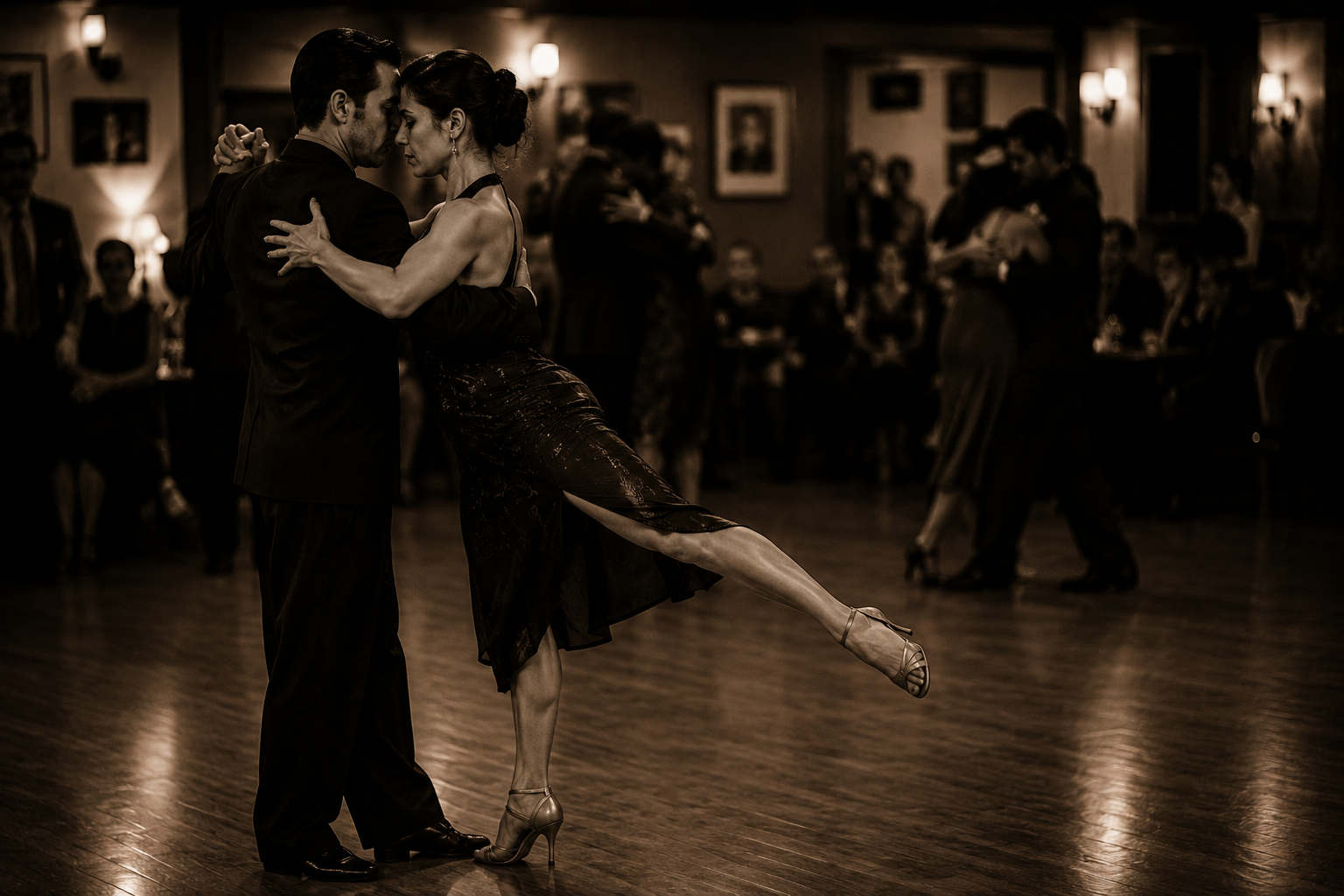
Visual created by Anita Flejter with the use of generative AI tools, inspired by the atmosphere and emotion of Argentine tango.
The mental shortcut that the leader "interprets the music" and the follower "follows the interpretation" is, well, a mental shortcut.
The music is playing for both people. The follower hears the same phrase, the same syncopation, the same breath in the melody. The difference is not who listens. The difference is who has the mechanical freedom to express what they hear.
The leader is busy. They are managing floorcraft, navigation, phrase structure, and the architecture of the next three steps. Their musicality often happens in the preparation: the way they breathe with the phrase, the way they stretch a step to match a violin line, the way they pause on a cadence.
The follower has a different kind of freedom. Their free leg is available for decoration, for extending a phrase the leader initiated. Their body can echo the melody in the embrace while their feet handle the rhythm. A good leader sets the conditions for the follower to play. A good follower plays without destroying the conditions.
But the follower also has a responsibility that is rarely discussed: keeping the obvious. Stay on the beat. Keep the rhythm. Listen to the melody, and do not add adornments where they do not belong. If the music is rhythmical, do not slow down. If the music stretches, do not drop rhythmical adornments into a sustained phrase. The follower's musical interpretation must belong to the same song the leader is hearing.
Here is another truth: the musical interpretation of the lead belongs to the follower. The leader may send one signal that contains three possibilities, three different directions, three different timings, three different energies. The follower feels them all, but chooses how to execute, and that choice must be made to the music, not merely to the perceived instruction. Think of it like this: a lead can be one exchange that contains enough material for the next four bars. There is no need to use all of it at once. The follower interprets and plays what serves the phrase.
This is why dancing with a musical follower feels like the music got visible. Not because they are showing off, but because they are listening on a channel the leader cannot fully occupy, and they are feeding what they hear back into the shared system.
What to feel in class: Can you hum the melody while you follow? Not to perform, but to test whether your body is actually connected to the music or just executing steps in time. If you are following mechanically, the melody feels like background noise. If you are following musically, the melody feels like instructions your body wants to answer.
The Molinete: Direction, Steps, and Who Is Responsible for What
The molinete is a four-step pattern: back, side, forward, side - repeating. The follower can enter from any step, and the pattern does not have to trace a perfect circle around a stationary leader. The leader can be moving through space as the follower does the molinete, which means the center of the arc shifts. What stays constant is the relationship between the two bodies and the follower's responsibility to maintain it.
The leader does not lead each individual step. They lead the direction. Once the direction is established, the follower continues in it. The leader only re-enters to change that direction. A follower who waits to be told each step is not following the molinete - she is waiting for a series of cues that were never meant to come. The molinete is meant to flow. The follower keeps it moving; the leader shapes it.
Changing direction is how the leader breaks the pattern. The moment the leader shifts their torso and redirects the embrace, the follower reads that as a new direction and adjusts. This is where listening matters most: not for permission to take the next step, but for information that the next step should be different.
On timing - and this is where it gets interesting.
There are two schools of thought on how the molinete moves in time. One holds that the side step and forward step are naturally faster than the back step, because the free leg travels a shorter arc on the inside of the circle and simply needs less time to get there. In this reading, the rhythm of the molinete is built into its geometry. The other school holds that every step lands on the beat unless the leader leads otherwise: everything slow and even, with speed changes explicitly invited.
Both approaches have logic. What they agree on is the underlying principle, and this principle matters beyond the molinete.
The follower's default timing is the music. Not the leader. The follower hears the music and is responsible for moving with it. The leader does not need to signal every beat - the music already does that. What the leader leads is deviation: faster here, slower there, pause now. That is the only timing information the leader needs to send, because the follower is already connected to the pulse.
This only works if the follower actually holds that connection. If she does not, if her timing is free-floating, following her own impulse or waiting to be told, the leader has no foundation to work from. Instead of leading musicality, the leader is now managing the follower's rhythm just to stay on time with her. The conversation collapses into logistics. The music becomes background noise for two people trying to synchronize.
A follower who owns her default timing gives the leader something to play with. That is where real musical dialogue in the molinete begins.
What to feel in class: In a molinete, are you connected to the music or to the lead? If the music stopped, could you keep moving at the same tempo? If not, you are borrowing your timing from your partner instead of bringing it yourself. Try this: before entering a molinete, find the beat. Let the music settle into your body. Then move. The steps will organize themselves around the music. The leader's job becomes much easier, and the dance becomes much more interesting for both of you.
The Active Follower Is Not a Rebellious Follower
Some leaders hear "active following" and picture a follower who hijacks the dance, who back-leads, who ignores the lead to do their own choreography. This is not active following. This is bad following.
Active following means the follower is fully present, fully balanced, and fully responsive. That includes the responsiveness to not move when the information is unclear, to not compensate when the shared axis is off, and to not decorate when it would interrupt the phrase.
The follower has veto power, but it is a veto they use sparingly and invisibly. If a lead is ambiguous, a follower who guesses forces a step that was not clearly offered. A follower who waits asks for clarification. The wait is information. It says: I am here, I am listening, but I did not receive a clear signal. Try again.
This is how followers teach without saying a word. The floor is a feedback loop, and the follower's body is the sensor.
What to feel in class: Are you filling silences because you are uncomfortable, or because you genuinely received a lead? Tension and momentum can both create accidental leads. A follower who steps into every gap is not being sensitive. They are being anxious. The best followers I know have a quality of stillness. They can stand on one foot for an entire phrase without clutching, without fidgeting, without making their partner feel like they failed. Their stillness says: I am here. I am ready. Send me something worth following.
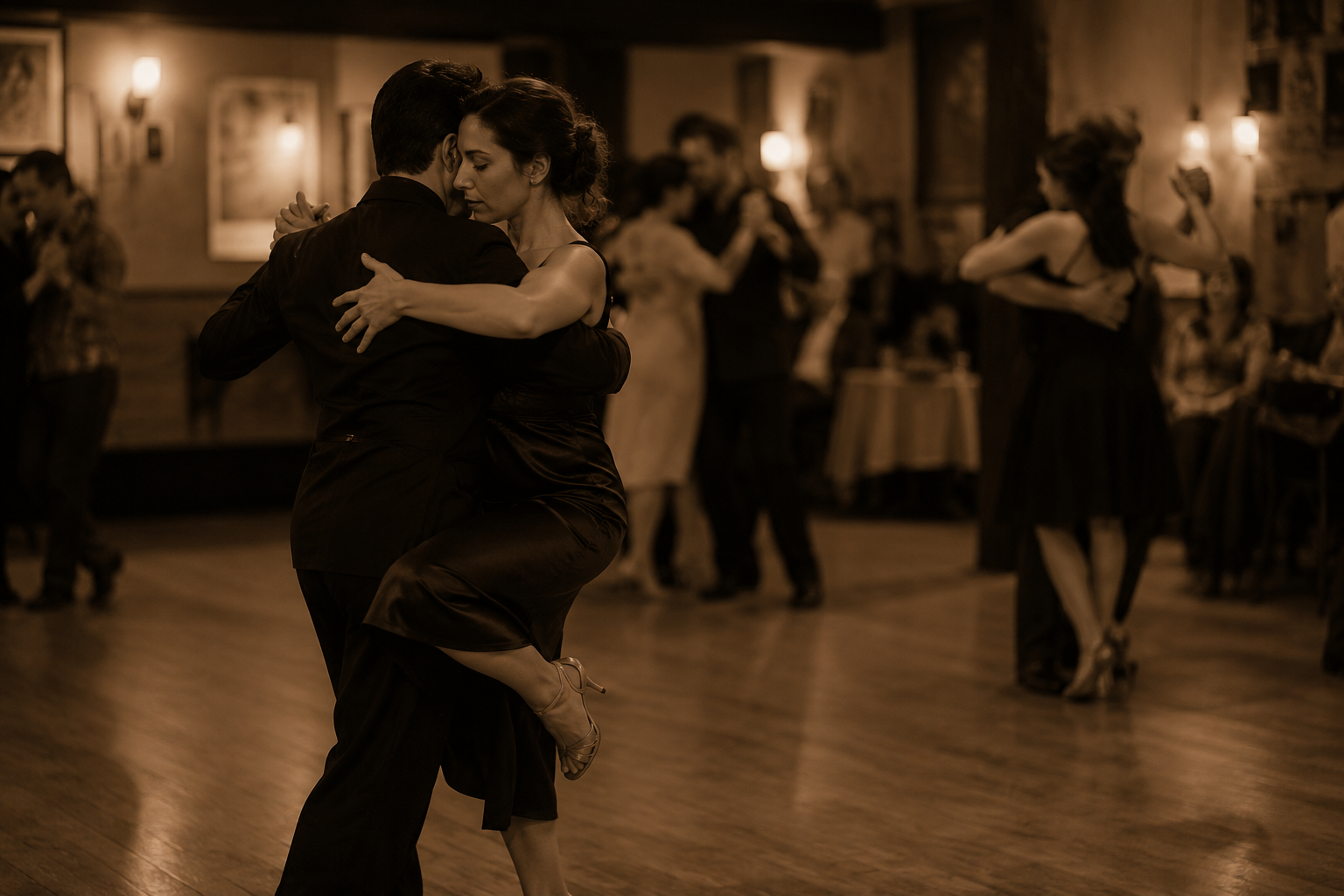
Visual created by Anita Flejter with the use of generative AI tools, inspired by the atmosphere and emotion of Argentine tango.
Practical Checks for Followers
These are not exercises!!! More like - diagnostics. Use them to figure out what is actually happening in your body.
The suitcase test: If someone put a heavy suitcase in your free arm, could you still follow? If not, you are using arm tension to stabilize yourself instead of your own axis. The follower's balance should live in the core, not in the embrace.
The closed-eyes check: Dance an entire song with your eyes closed. Not to be romantic, but to find out whether you are using visual cues to compensate for a weak connection. If you feel lost, something in the connection is too light, too inconsistent, or too visual. That is information for both of you.
The one-foot check: Can your partner pause you on one foot for a full musical phrase without you clutching or micro-bouncing? If not, your standing leg is not fully committed. You are split-weight, ready to flee. A committed axis is a follower's superpower. It makes every lead readable because your body is not preoccupied with self-rescue.
The decoration test: Pick one song and do not decorate at all. No rulos, no taps, no add-on rhythmical changes. If the dance feels empty, your musicality might be living in your free leg instead of your whole body. Decoration should be expression, not compensation.
The Hard Truth
Most followers who feel "heavy" or "unresponsive" are not lacking talent. They are lacking a clear axis, or they are guessing instead of listening, or they have been waiting passively for something that was never going to arrive with the clarity they expected.
When a connection is not working, the cause usually lies in the system, not in one partner alone. A follower may be guessing instead of responding, or missing a committed axis, or filling space that was not offered. A leader may be sending information through the arms rather than the center, or initiating movement before establishing clear weight. Naming these things is not to blame. It is diagnosis. The embrace is a feedback loop, and both partners are contributing to it at the same time.
The embrace is a conversation. A real conversation requires two people who can both listen and respond, who share enough vocabulary to be understood, and who care enough about the exchange to pay attention to what is actually being said.
The follower's job is not to make the leader look good. The follower's job is to be fully present, fully balanced, and fully responsive so both can enjoy and ‘talk’. Which, as it happens, usually makes the partnership look very good indeed.
What are you feeling in your follow that you cannot explain? Bring it to class. There is a mechanical reason for almost everything, and half the job of learning tango is learning to trust that your body already knows more than you think it does.