Tango Brings Out Your Relationship Issues (And That Is Why You Should Pay Attention)

A tanda is ten minutes. That is long enough to be real and short enough to be honest.
If you have been dancing tango for any length of time, you already know this. The embrace does not let you hide. There are no scripts to follow, no walls to stand behind, no phone to look at when things get uncomfortable. You are holding another person, moving together, and whatever you typically do in close relationships will show up whether you invite it or not.
This is not a bug in the system. It is the system.

Visual created by Anita Flejter with the use of generative AI tools, inspired by the atmosphere and emotion of Argentine Tango.
Tango does not create your patterns. It exposes them. The way you handle trust, control, surrender, and negotiation on the floor is usually the way you handle them everywhere else.
The difference is that in normal life, these patterns unfold over months or years, buffered by conversation, distance, and the endless distractions of work and routine. In tango, they unfold in ten minutes. The compression makes them visible. And once you see them, you cannot unsee them.
The Controller
Some leads cannot stop managing. Every step is a directive. They lead the cross, the ocho, the turn, and then they lead the follower's breathing. Their frame is tight not because they are connected, but because they are steering. The follower is not a partner; she is a vehicle.
If you are this leader, you probably do not mean any harm. You want the tanda to go well. You have learned patterns and you are executing them cleanly. The problem is that you have left no space for another person to exist inside the dance. She cannot contribute because you have not built any architecture for contribution. You are delivering a performance and she is the prop.

Visual created by Anita Flejter with the use of generative AI tools, inspired by the atmosphere and emotion of Argentine Tango.
Off the floor, this often shows up as the person who plans the vacation, chooses the restaurant, manages the conversation, and becomes quietly irritated when their partner makes a decision independently. It is not malicious. It is a reflex: the world works better when you are holding the reins, so you hold them. In tango, that reflex becomes physical. The follower feels it immediately. She may not name it, but she feels it. And after the tanda, she will probably avoid you without knowing exactly why.
The shift is possible, but it needs to be intentional. Lead without commanding. Invite instead of instruct. Leave actual space (physical, temporal, musical) for the follower to step into, and then (this is the hard part) actually listen when she does. The best leads do not know what is coming next. They have an idea, they propose it, and they adapt to what she offers back. That is the difference between steering and conversing.
The Disappearing Act
Some followers are so reactive they have no presence. They respond to every lead but contribute nothing. They track the steps accurately, their balance is fine, their technique is correct. But dancing with them feels like dancing with a ghost. They are not there. They are orbiting you, not meeting you.
This is often a pattern of accommodation taken to its extreme. The follower has learned that the safest way to move through the world is to become agreeable, adaptable, and invisible. They do not argue. They do not insist. They read the room and become whatever the room needs.
On the floor, this translates to a follower who never takes a risk, never stretches a step, never adds her own musicality. She is afraid to be wrong, so she chooses to be absent.
In relationships, this is the person who says "whatever you want" until resentment builds and leaks out sideways. It is the person who avoids conflict by disappearing, who smooths over their own preferences so consistently that eventually they cannot locate them anymore. Tango makes the cost of this pattern brutally clear. A lead can feel when no one is home. The dance becomes mechanical. The connection is one-way.
The work is to follow without vanishing. Track the lead, yes. That is the job. But also commit your own weight, your own timing, your own musicality. You are not cargo. You are a participant..
The best followers have a quality of presence that has nothing to do with vocabulary and everything to do with owning their side of the embrace
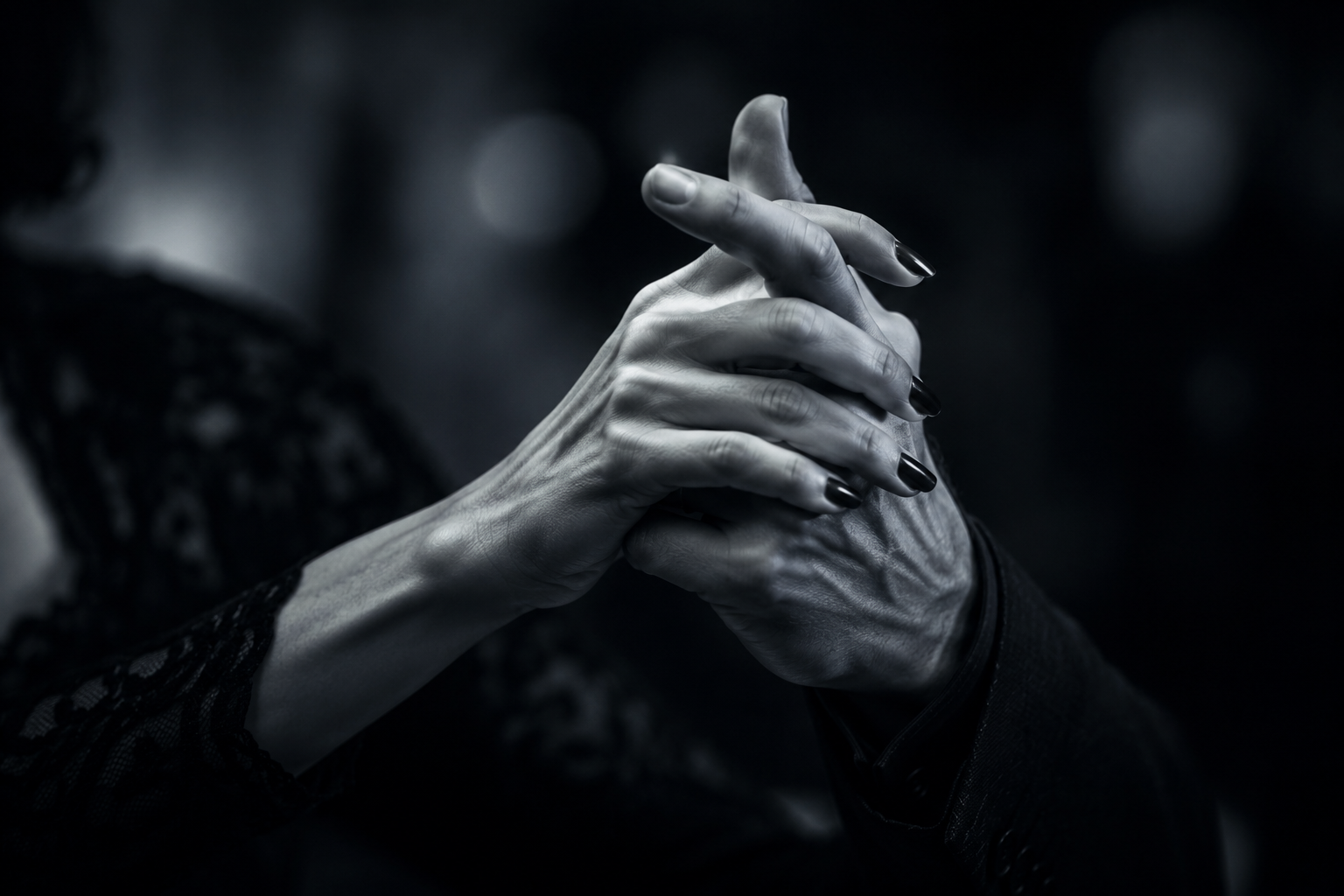
Visual created by Anita Flejter with the use of generative AI tools, inspired by the atmosphere and emotion of Argentine Tango.
The Withdrawn
Then there is the leader who steps back and expects the follower to meet him. He calls it subtle. He calls it minimalist. The follower calls it vague. His lead is so light, so understated, so supposedly "sensitive" that she has to guess what he wants. She fills in the blanks because someone has to, and by the end of the tanda she is exhausted from doing half his job.
This is withdrawal disguised as refinement.
In life, this is the person who avoids taking a clear position, who speaks in hints and expects you to decode them, who resents you when you guess wrong but never bothers to be direct. It looks like gentleness. It functions like abandonment. The follower is left with the emotional labor of keeping the partnership alive.
The correction is responsibility. Lead clearly. Not forcefully (that is the Controller), but clearly. Your partner should not have to read your mind. The embrace is a channel for information, not a guessing game. Take responsibility for the partnership, and let the follower take responsibility for her response. That is the deal.

Visual created by Anita Flejter with the use of generative AI tools, inspired by the atmosphere and emotion of Argentine Tango.
The Over-Giver
This one is harder to spot because it looks like good dancing. The follower anticipates everything, compensates for the lead's mistakes, smooths over the rough edges.
The tanda looks clean. The lead probably thinks he danced well. Internally, she is exhausted and quietly resentful.
She is doing all the emotional labor so the tanda looks good. She adjusts her balance when he is off axis. She covers his late timing by rushing her own. She makes him look better than he is, and she pays the cost in tension and fatigue.
In relationships, this is the person who manages everyone's feelings, who plans around other people's limitations, who never mentions their own needs because mentioning them feels like a burden. They are praised for being easygoing, adaptable, and low-maintenance. They are also slowly eroding themselves.
The answer is not to become difficult. It is to stop compensating. Let the rough edges show. If he is late, be late with him. If the lead is unclear, do not guess (do not dance for him). Your job is to follow, not to fix. The dance will not fall apart. It will simply become honest, and honesty is exhausting at first but sustainable in the long run.
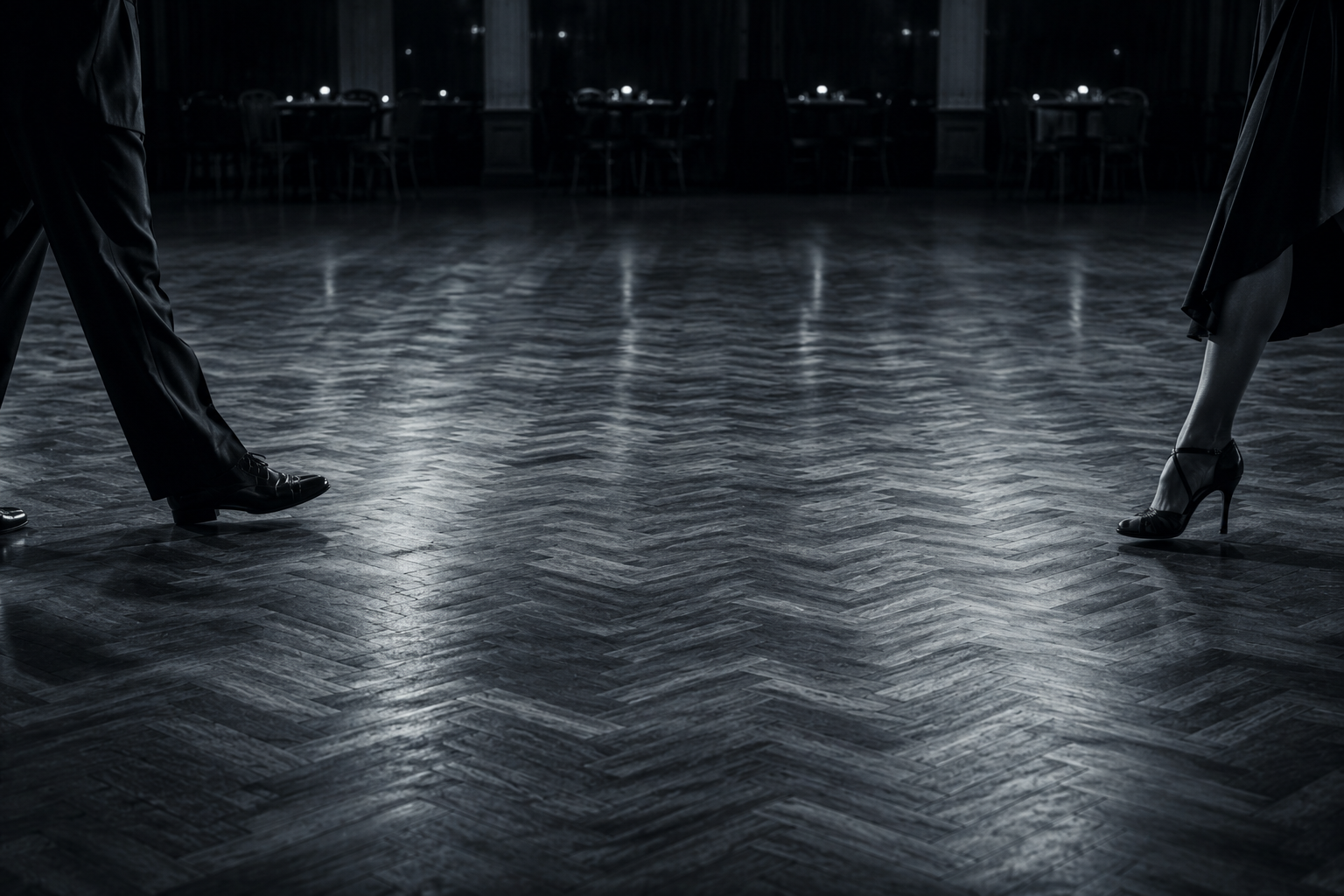
Visual created by Anita Flejter with the use of generative AI tools, inspired by the atmosphere and emotion of Argentine Tango.
Why This Matters
These are not tango problems. They are life problems wearing dance shoes.
They are life problems wearing dance shoes.
The leader who controls every step often controls conversations, plans, and decisions at home. The follower who disappears often has a pattern of accommodating to avoid conflict. The person who over-gives in the embrace often over-gives in friendships, work, and family until they have nothing left.
Tango is not therapy. It does not fix you. But it is a mirror, and the mirror is unusually precise. You can look away, or you can pay attention.
The ten-minute container helps because it is low-stakes and high-clarity. If a pattern shows up in a tanda, it is probably showing up elsewhere. If you learn to shift it on the floor, you have proof that you can shift it at all.
The Work
The best tandas have a quality of negotiation: two people adjusting, proposing, accepting, redirecting. The dance is alive because it is co-created, not delivered.
For leaders, this means learning to propose without insisting. You can lead a step and still allow it to be modified, rejected, or transformed by your partner. She may add a beat, stretch an ocho, or simply change the quality of her embrace in response. That is not disobedience. That is conversation.
For followers, this means owning your side of the equation. Your weight, your axis, your timing, your musicality. These are not gifts you give to the lead. They are your responsibility. When you bring them fully, the lead does not have to drag you through the dance. He can dance with you.
The payoff is immediate and long-term. When you learn to lead without dominating, people want to dance with you more. Not because your steps are better. Because they feel free inside the embrace. When you learn to follow without disappearing, your dancing develops texture. Your partners notice something that cannot be taught in a class.
And sometimes (not always, but sometimes) the pattern you break on the floor stays broken in the rest of your life.
The Real Question
Tango is a difficult art to learn. It asks for physical precision, musical sensitivity, and social courage. But underneath all of that, it asks something simpler: can you be honest with another person for ten minutes?
Most people cannot. That is why it is hard. That is also why it is worth doing.
The next time you step into an embrace, notice what shows up. Not the steps. The dynamic. Are you holding too tight, or not enough? Are you giving away your presence, or demanding someone else's? Are you compensating, withdrawing, controlling, or actually meeting someone in the middle?
The tanda will end. The pattern might not. But now you have seen it. And seeing it is where change starts.
Seeing it is where change starts.
At Ultimate Tango, we teach the embrace as a physical conversation (not a performance). Our classes and prácticas give you the structure to practice presence, connection, and partnership at every level. Join us and learn to dance with someone, not at them.