
You Can't Force the River

The first time I watched a beginner try to muscle through an ocho, I saw myself. The shoulders tense, the jaw set, the foot placed with the grim determination of someone trying to push a door that opens the other way.
They were not dancing.
They were ‘arguing’ with the dance.
Here is the truth that no one wants to hear in the warm-up circle: effort is not a substitute for understanding. You can repeat a movement a hundred times, do it faster, grit your teeth, pour more intention into it, and you will still be wrong. The body does not care about your enthusiasm. It cares about mechanics. And if your mechanics are off, repetition only etches the error deeper - carves it into your muscle memory like a name into wet cement.
This is not a feel-good story about perseverance. This is physics.
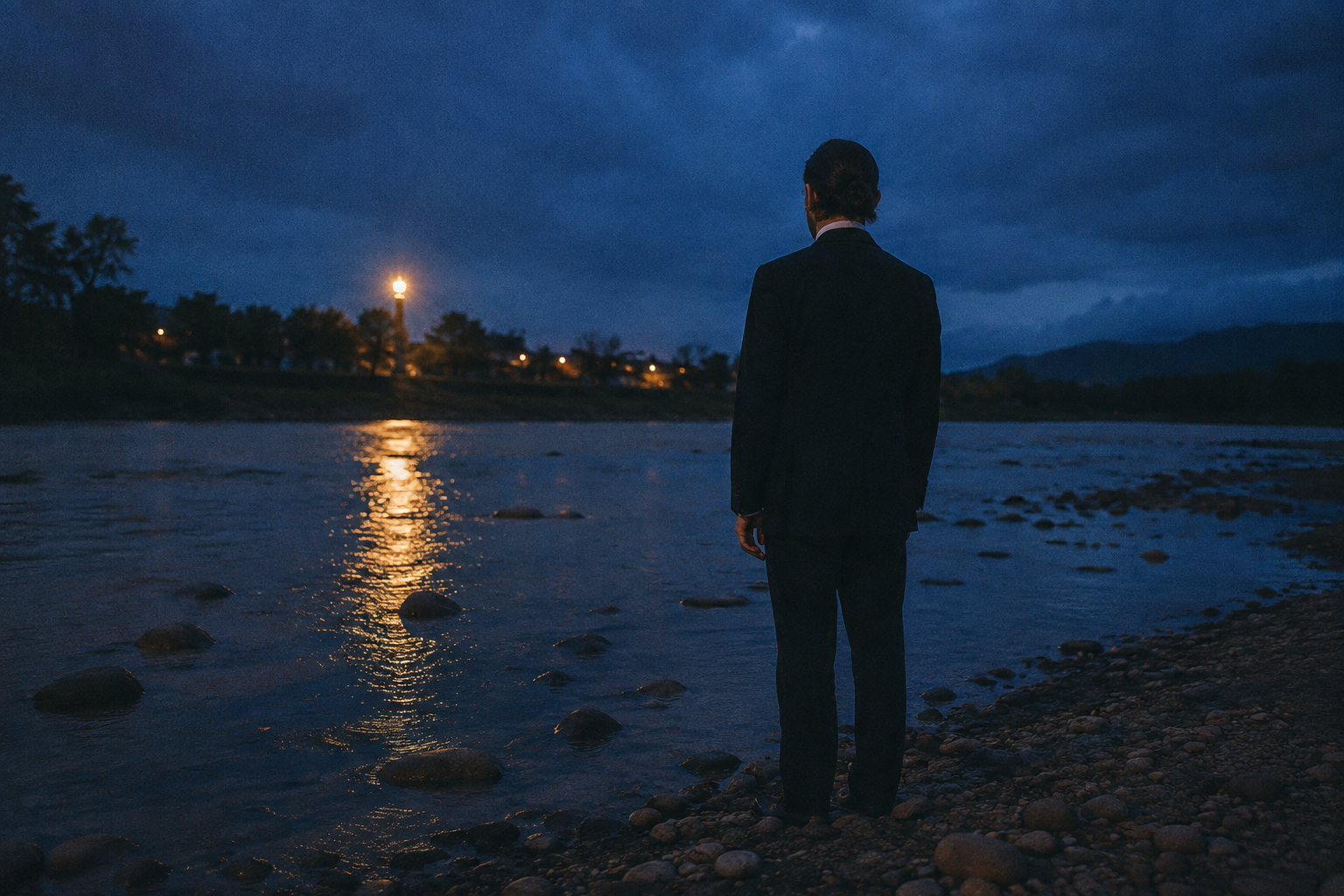
Visual created by Anita Flejter with the use of generative AI tools, inspired by the atmosphere and emotion of Argentine Tango.
The Hundred Wrong Repetitions
Bruce Lee, who knew something about making the body obey the mind. said it with terrifying clarity: ‘I fear not the man who has practiced 10,000 kicks once. I fear the man who has practiced one kick 10,000 times.’ The distinction matters. Ten thousand sloppy kicks do not make a martial artist. They make someone who has rehearsed a mistake until it feels natural.
I think of this every time I see a leader drill giros in the corner of the milonga, spinning faster and faster, convinced that velocity will eventually produce grace. It will not. A giro without dissociation is just a person turning in circles. You can do it a thousand times. You will only become very good at doing it badly.
A friend of mine codes for a living. He has a phrase he uses when junior developers paste the same broken function into seventeen different files: ‘You can't iterate your way out of a bad architecture.’ The compiler does not care that you tried harder. The bug does not yield to sincerity. You have to stop, admit the structure is wrong, and rebuild from the foundation. Tango is the same. The floor is the compiler. It returns errors in real time.
You have to stop, admit the structure is wrong, and rebuild from the foundation.
The Admission
There is a moment in every dancer's life - if they are honest - when the floor stops being an opponent and starts being a mirror. You feel heavy. Your partner feels heavy. Nothing flows. And somewhere in the frustration, if you are brave enough, a quieter thought arrives:
It is not the floor. It is not the shoes. It is me.
That admission is the door. Everything before it is hallway.
To get better - at anything, but especially at this - you must first admit that you are not there yet. Not almost there. Not ‘just need to practice more.’ Not there. The leader who blames the follower for missing a lead has stopped learning. The follower who collapses her axis or guesses the movement and calls it ‘being easy to lead’ has stopped learning.
The ego wraps itself in excuses because the ego would rather be righteous than be good.
T.S. Eliot wrote in ‘Four Quartets’:
> ‘The only wisdom we can hope to acquire / Is the wisdom of humility: humility is endless.’
I keep that line near me. It is not decoration. It is a warning. Humility is not a posture you strike once and move past. It is the permanent condition of anyone who is actually learning. The moment you believe you have arrived, you have left. The moment you think you are humble enough, you are not.
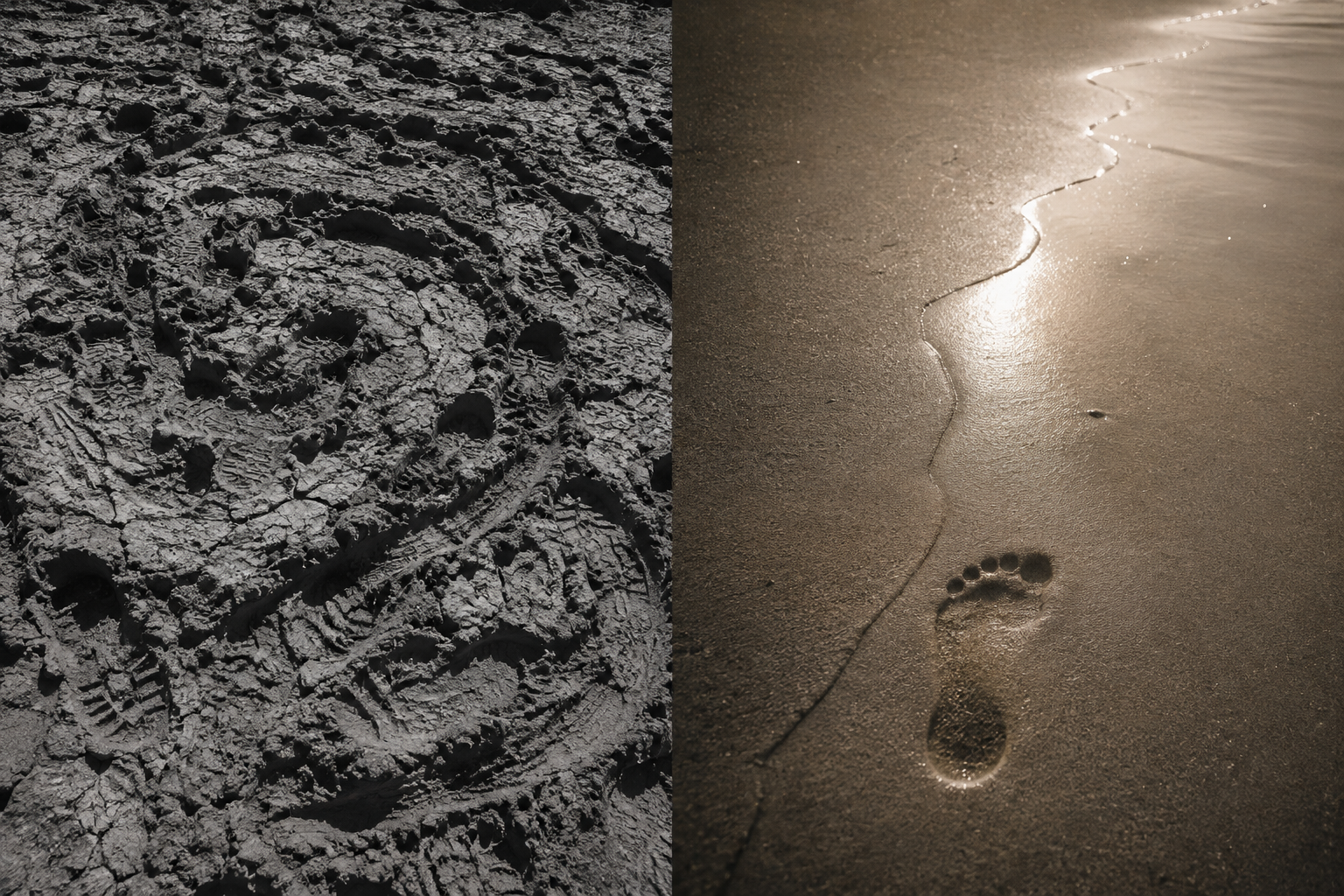
Visual created by Anita Flejter with the use of generative AI tools, inspired by the atmosphere and emotion of Argentine Tango.
You Cannot Give What You Do Not Have
This is the part that stings.
Tango is a partnered dance, and we enter it wanting to connect. But connection is not a gift you bestow. It is a state you generate. If your own axis is unstable, you cannot create stability for another. If your own listening is dull, you cannot hear what your partner is offering. If your own timing is approximate, you cannot meet the music precisely enough to leave room for another person inside it.
Improving yourself is not selfish. It is the only route to a real partnership.
I have danced with leaders who apologized constantly for their ‘bad’ leading, as if guilt were a technique. I have danced with followers who smiled through every awkward step, erasing themselves so completely that there was no one there to dance with. Both were trying to be good partners. Both were missing the point.
A good partnership requires two people who are present, grounded enough to take weight, clear enough to give direction, honest enough to reveal where they actually are instead of where they wish they were.
The best cooks know this. A sauce does not care about your ambition. It cares about temperature, fat content, the order of operations. You cannot rush a béchamel by turning the flame higher. You will only burn the roux. The kitchen does not reward effort. It rewards attention. The same butter, the same flour, the same milk - one cook produces silk, the other produces paste. The difference is not passion. The difference is understanding when to stir, when to wait, and when to start over.
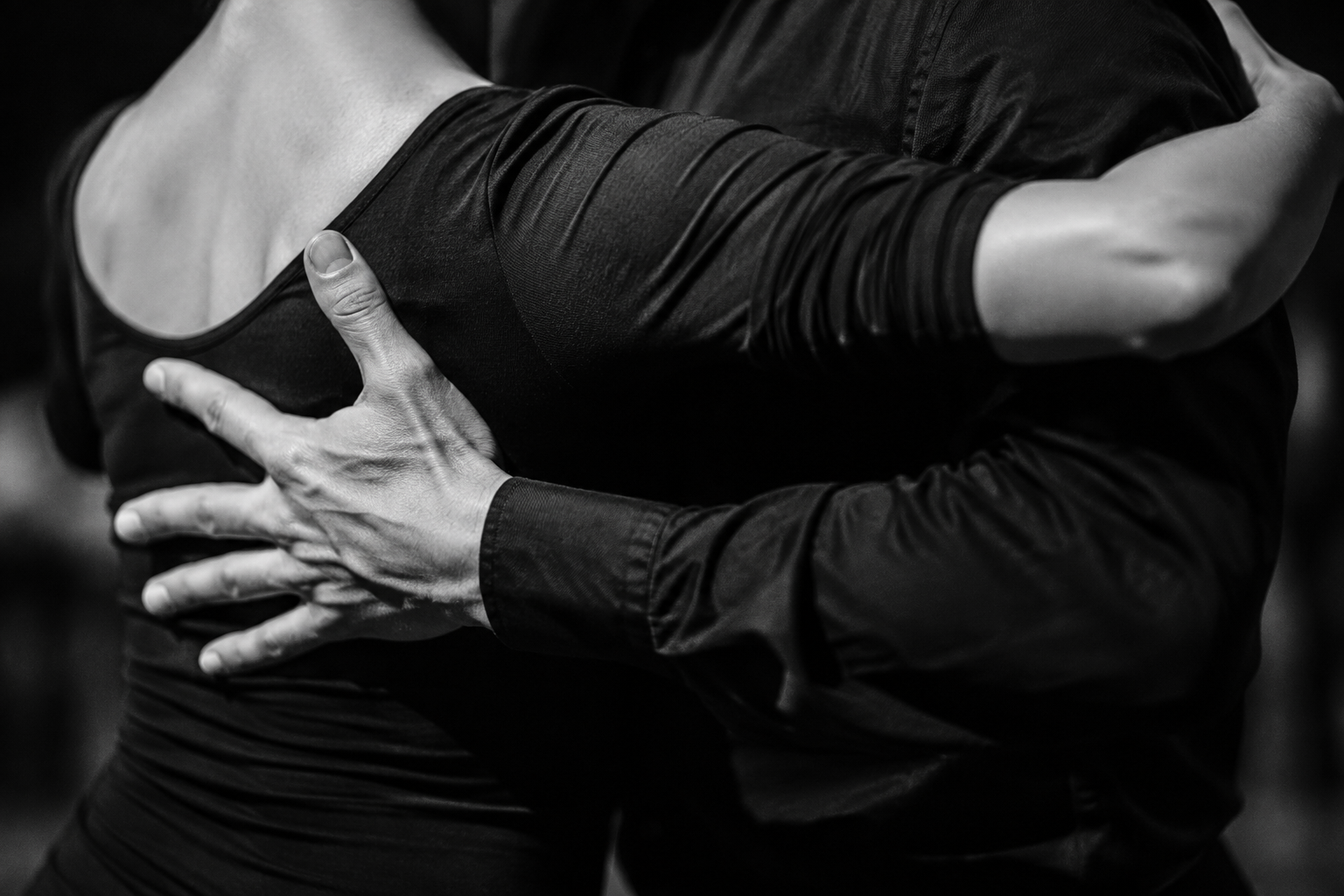
Visual created by Anita Flejter with the use of generative AI tools, inspired by the atmosphere and emotion of Argentine Tango.
The Music Is Patient. You Are Not.
Milongueros have a saying: ‘El tango te espera’ - tango waits for you. I used to think that meant the community was welcoming. Now I think it means something harder: the dance does not hurry. It will be there, with all its complexity, when you are ready. But it will not meet you halfway if you have not done the work.
In Enrique Santos Discépolo's lyrics for ‘El Choclo’, he describes tango as the thing that lifted ambition from the humble suburbs of Buenos Aires:
> ‘Con este tango que es burlón y compadrito /
se ató dos alas la ambición de mi suburbio.’
> With this tango - mocking and street-smart -
the ambition of my suburbio grew wings
But notice the order. The wings came from the tango, not from the dancer's willpower. The music was already complete. The dancer had to become worthy of it.
I think of Kobe Bryant, who practiced his fundamentals for hours before teammates arrived, not because he lacked skill but because he understood that the foundation was the only thing he could trust under pressure. When the game was close and the lights were bright, he did not invent new moves. He relied on what he had built when no one was watching. That is what the walk is in tango. That is what the embrace is. That is what the single step, taken with full presence, becomes when you have done it ten thousand times - not faster, but cleaner.
You Will Never Arrive
This is the second uncomfortable truth, and it is the one that frees you.
There is no finish line. The best dancers I know do not believe they have mastered tango. They believe they are working on it - that there is always a deeper layer of timing to hear, a cleaner layer of mechanics to find, a more honest layer of presence to offer. The music is inexhaustible. The body is inexhaustible in its capacity to betray and to surprise. You will never optimize all of it. You will never hear everything.
That sounds discouraging only if you think the point is to arrive. The point is not to arrive. The point is to be in the conversation.
The good start - the only start - is the humble thinking that you never will be fully there. Neither will I. I have been dancing for years, teaching for years, and still there are nights when my axis wavers, when my listening dulls, when I reach for a figure my body is not ready to execute cleanly and the floor says no. The floor always says no when you are pretending.
But here is what happens when you stop pretending: the dance opens.
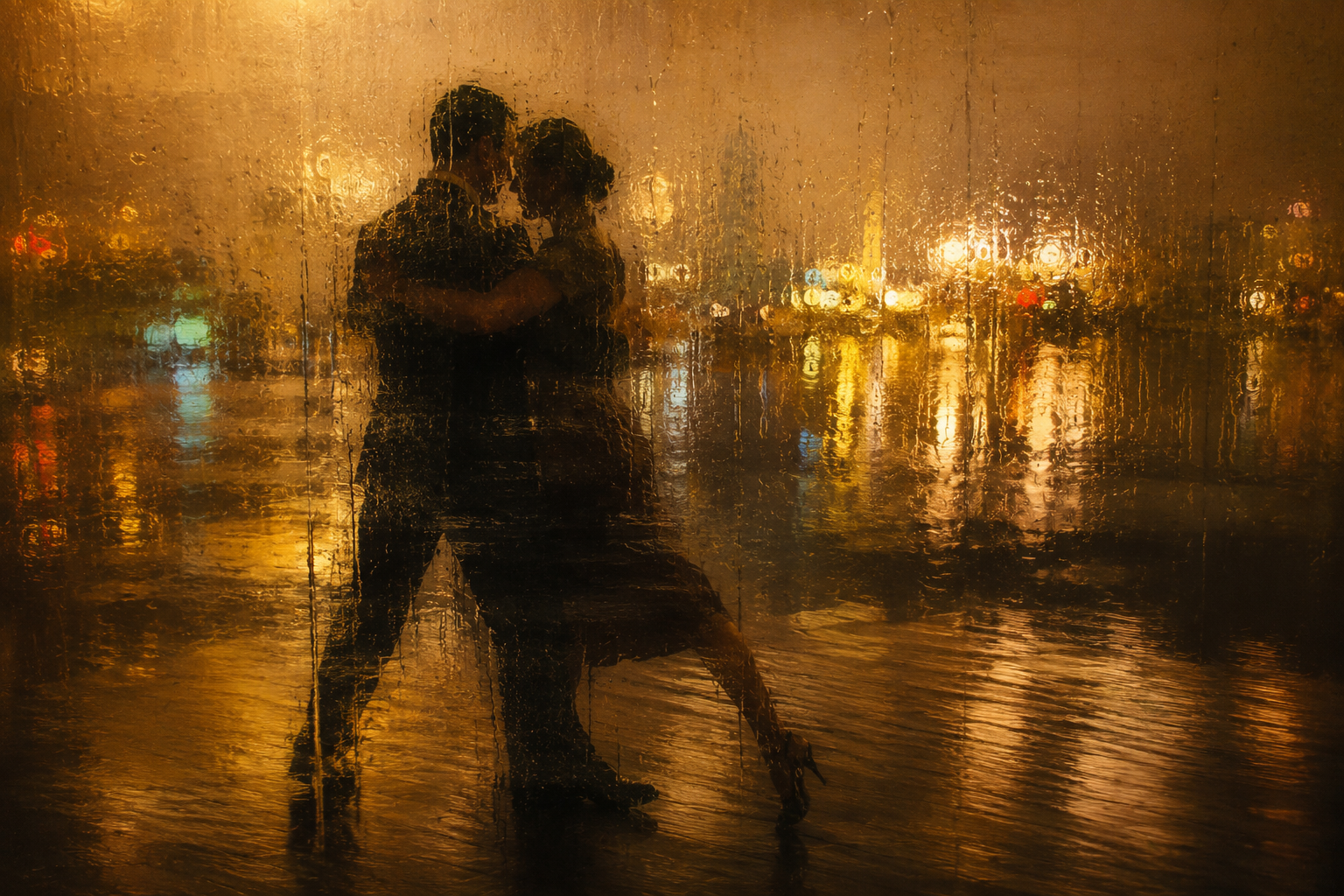
Visual created by Anita Flejter with the use of generative AI tools, inspired by the atmosphere and emotion of Argentine Tango.
Tango Is Already Paying Me Back
I am not there. I will never be there. And yet.
When your body finally understands something it did not understand before - when a weight shift that was forced becomes effortless, when an embrace that was tense becomes a real transmission, when you and another person move as one organism for even three seconds - the sensation is overwhelming. It is not happiness. It is something deeper: the feeling of your own competence expanding, of your capacity to be present in your own body and with another human being simultaneously. It is not small. It changes you.
And it does not stay in the dance.
The people I share this with - the ones who understand that this is work, that this is humility, that this is the long road - have become my friends. My family, in a way that extends far beyond the milonga. We recognize each other not because we are great dancers. We recognize each other because we have all stood in the same place of not-knowing, admitted it, and kept showing up.
The lessons apply everywhere. You cannot force understanding. You cannot skip the foundation. You must admit what you do not know before you can learn it. And the deepest rewards come from the process, not the destination.
Tango asks a lot. It asks for your honesty, your patience, your willingness to be bad at something in front of other people while touching a stranger. But when you are ready - when you have done the work, admitted the gaps, built the structure - it gives something back that is disproportionate. It gives you yourself, more functional than before, more connected than before, more capable of meeting another person without performance or pretense.
The dance is not fast, and it is not easy. But it is real. And when you are ready for it, it is overwhelming.