The Music Makes You Wait: Why Tango Dancers Worship the Pause (Copy)

There is a strange moment in every tango dancer's development. It usually happens at a milonga, sometime after the first year. You are sitting or standing, watching the floor, and you notice something. The dancers who look the most at ease, the ones who seem to have a conversation rather than perform a routine, are not the ones doing the most.
They are the ones doing the least. Their feet stop. Their weight shifts. They hold still while the music swells around them, and somehow that stillness says more than a dozen steps ever could.
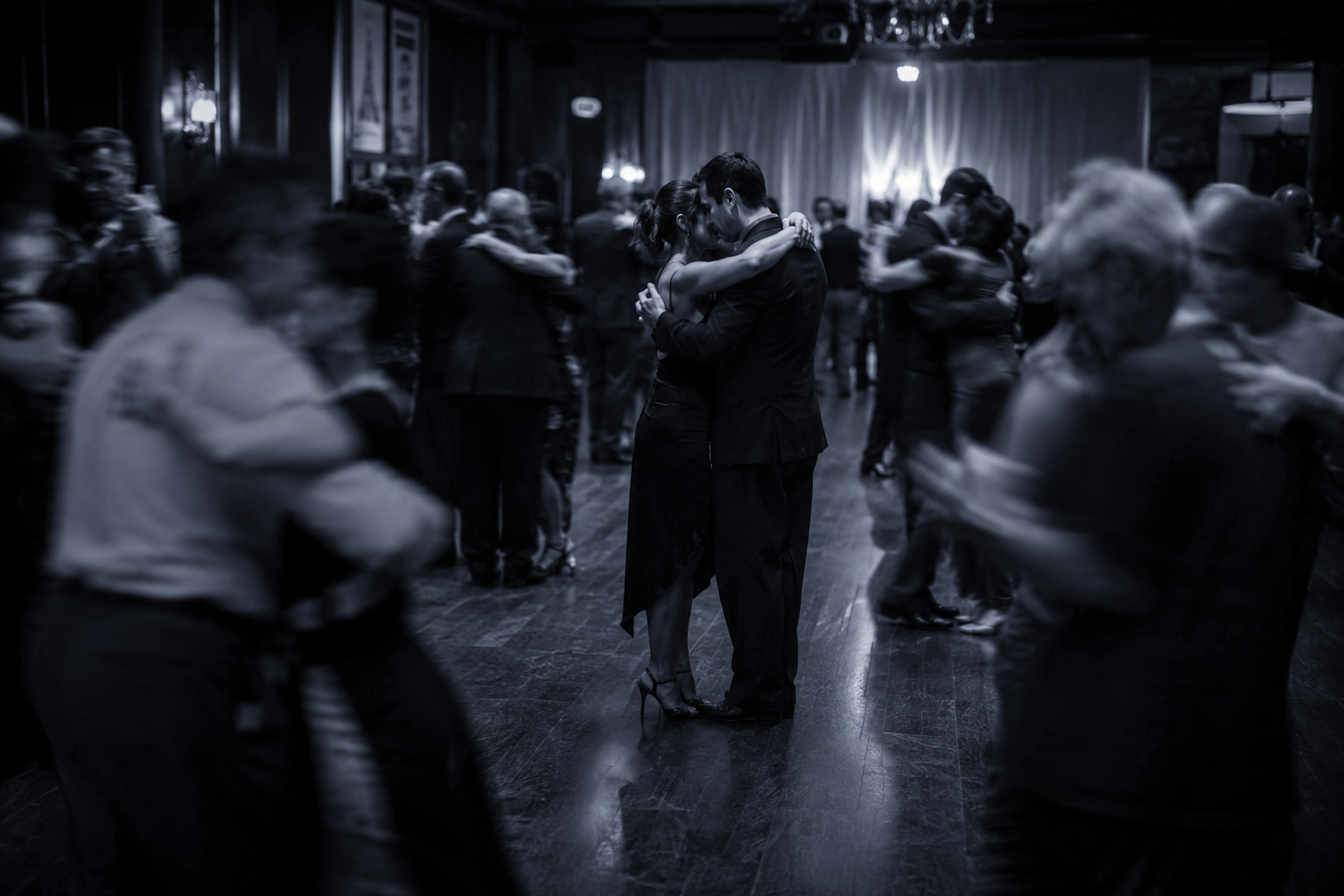
Visual created by Anita Flejter with the use of generative AI tools, inspired by the atmosphere and emotion of Argentine tango.
You have spent months, maybe years, learning to move. You have collected patterns, practiced pivots, drilled the cross until it happens without thought. And now you realize that the people you want to dance like are not moving very much at all. They are listening. They are waiting. And they make you want to wait with them.
This is the hidden curriculum of tango. Nobody warns you about it in beginner class because beginner class has a different job. It has to get you from zero to functional. It gives you a vocabulary: the walk, the cross, the ocho, the giro. These are countable things. You can practice them in sets of ten. You can feel yourself improving because your body is doing something it could not do last month. The progress is visible.
The milonga does not care about your vocabulary.
At a milonga, the music is not background.
It is the reason everyone is in the room.
And the music does not move at a steady pace. It breathes. It stretches. It stops entirely for a fraction of a beat and then releases, like a wave pulling back before it crashes. If you are only counting, you miss this. You step through the silence because silence feels like failure. It feels like standing in the middle of a sentence with nothing to say. So you fill it. You throw in a boleo you are not sure about, or you rush the next step, or you tighten your embrace because your brain is screaming that you should be doing something, anything, to justify the connection.
The dancers who have been at this longer have learned something you have not yet. The music is not asking you to keep up. It is asking you to hear it.
Tango music is structurally built for pause. This is not mysticism. It is orchestration. Listen to any classic tango from the golden era (Di Sarli, D'Arienzo, Troilo, Pugliese).
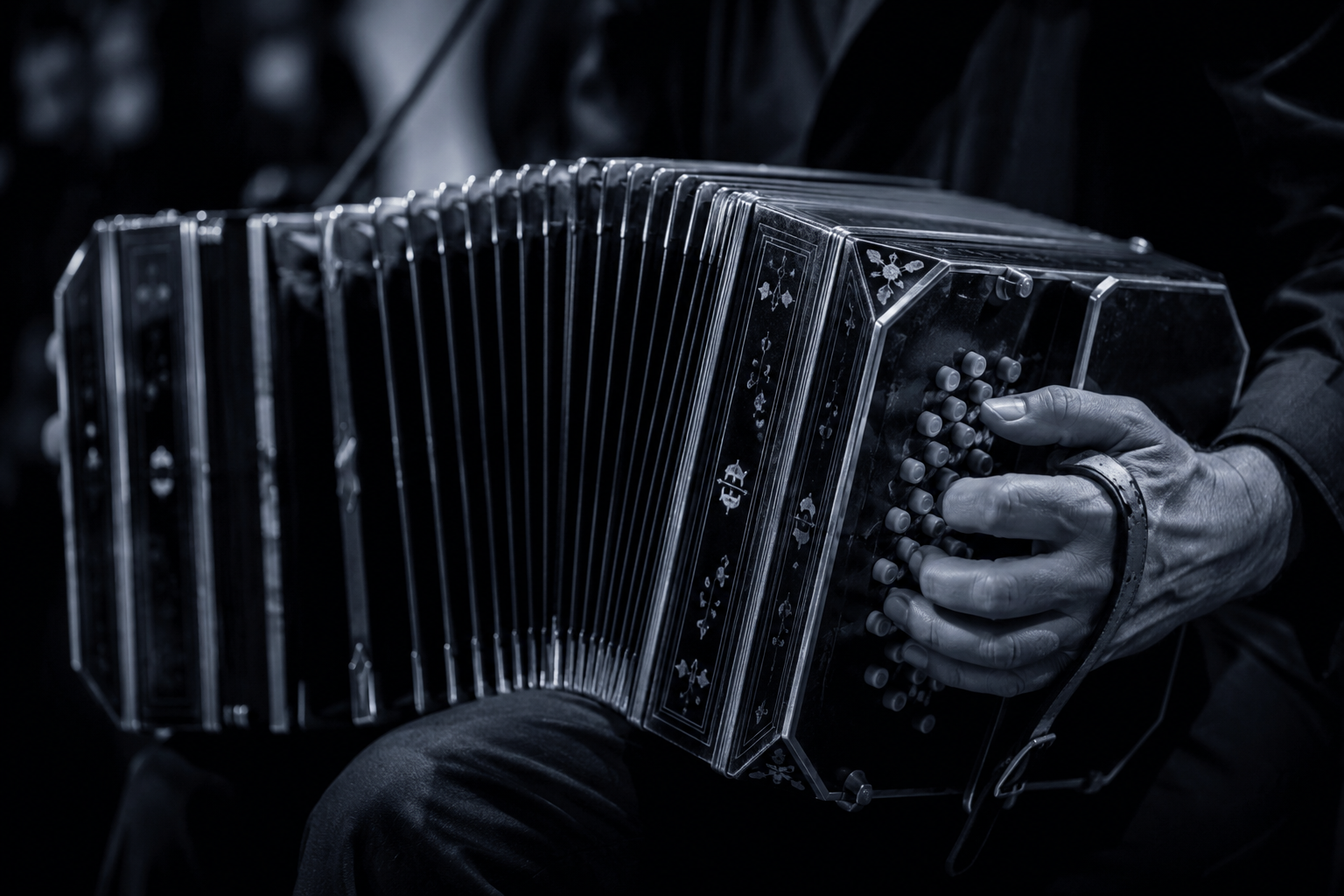
Visual created by Anita Flejter with the use of generative AI tools, inspired by the atmosphere and emotion of Argentine tango.
The bandoneón does not play like a piano. It inhales and exhales. The violin sections swell and drop away. The singer waits a full phrase before entering, and when they do, they stretch words across beats in ways that make the tempo feel elastic. There are moments where the entire orchestra pulls back, thins out, and leaves space deliberately empty. These are not accidents. They are invitations.
Rubato (the stretching and compressing of time within a phrase) is not an effect added on top of the beat. In tango, it is the architecture. The music itself tells you to wait. The problem is that waiting is not a skill most adults have cultivated.
We live in a culture that treats stillness as dead air.
We fill silences in conversation. We scroll while waiting for coffee. We answer emails while music plays. Our reflex is to produce, to cover, to keep the line moving. Then we walk into a tango milonga and the best thing we could do is nothing, and our entire nervous system revolts against the idea.
This is why the pause is harder than the step. The step has a protocol. You know where your foot goes. The pause has no protocol. It is a decision, made in real time, shared with another person, to trust that the music will return and carry you with it. It requires something that cannot be drilled: the willingness to be visible without performing.
There is a social pressure to this that beginners rarely name out loud but almost all feel. You are in an embrace with someone. Other people can see you. The song is playing. Your job, you think, is to dance. To produce movement. If you stop, maybe your partner will think you have lost the beat. Maybe they will think you have run out of ideas. Maybe they will fill the space themselves, pulling you forward because they, too, are uncomfortable with the silence. The milonga becomes a game of hot potato, each dancer passing the obligation to move back and forth until the song ends and both people feel vaguely exhausted without knowing why.
The first time you dance with someone who actually waits, the experience is disorienting. They stop. You feel the stop in their chest, their shoulder, the subtle shift of weight that says "not yet." Your first instinct is panic. Your second instinct, if you let yourself feel it, is relief. You do not have to generate the next thing. You can listen together. You can let the music do the work. And when the movement resumes, it carries a weight and intention that was impossible when you were chasing the beat.
This is the real conversation in tango. Not the patterns. The shared decision to move or not move, to stretch a step across an extra half-beat because the violin is still singing, to hold a suspension while the bandoneón catches its breath. Two people agreeing, without words, to let something outside themselves set the pace.
If you are newer to this, none of this means you should stop taking classes or practicing steps. You need the vocabulary. You cannot have a conversation without words. But you can start building the habit of listening alongside the habit of moving. It does not require being "advanced." It requires attention.
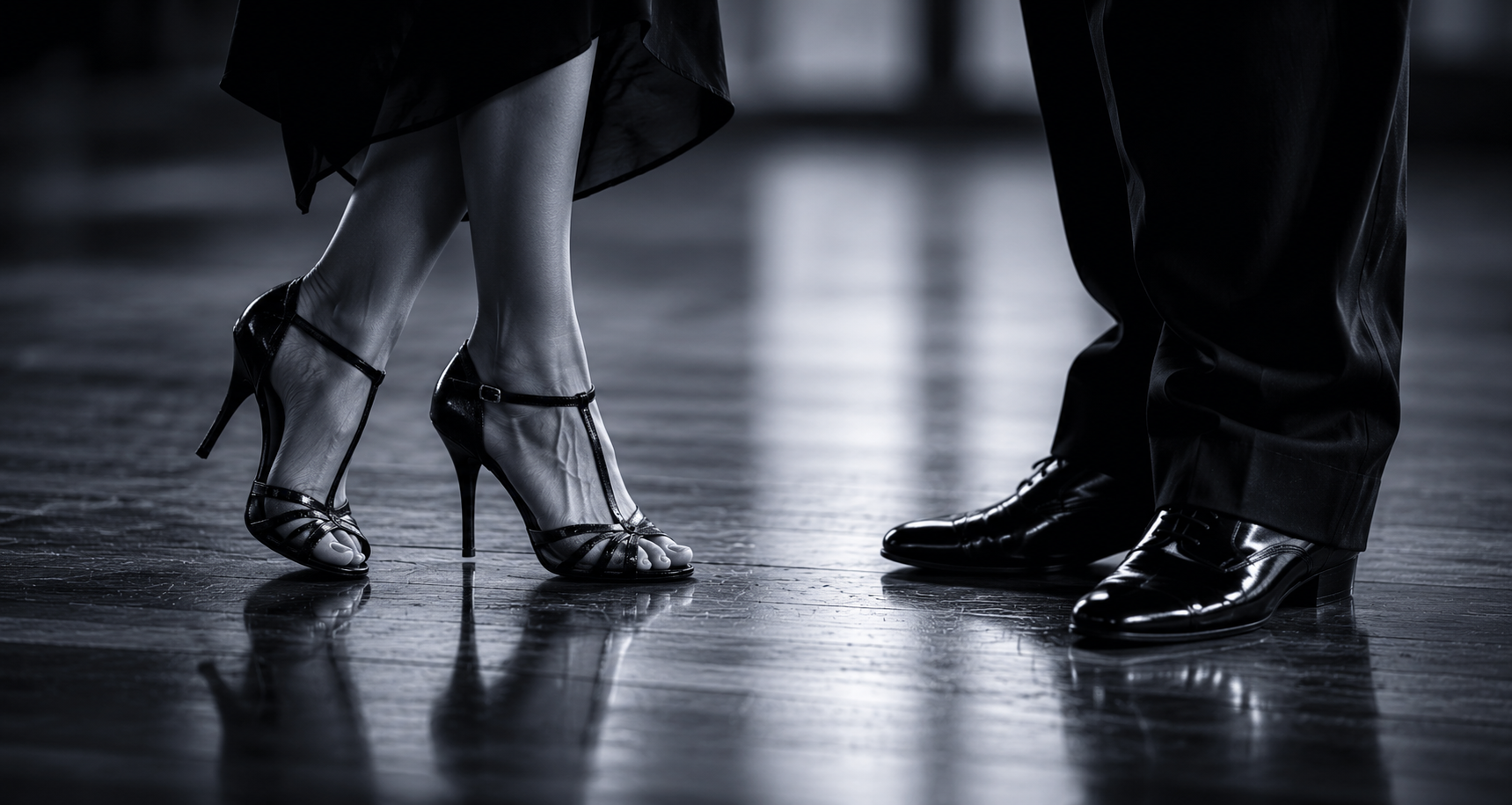
Visual created by Anita Flejter with the use of generative AI tools, inspired by the atmosphere and emotion of Argentine tango.
Here are a few entry points that work at any level.
Start with the end of a phrase. Tango music is organized in phrases, usually eight beats long, often grouped in pairs. At the end of a phrase, there is a natural resolution. The harmony lands. The melodic line completes its thought. Try this: walk simply, nothing fancy, and when you hear that resolution (it feels like a breath out), stop. Not for long. Just a beat. Let the landing happen with your body still. Then resume on the next phrase. It will feel mechanical at first. That is fine. You are learning the geography of the song.
Listen for the bandoneón's breath. The bandoneón is a bellows instrument. The player opens and closes it. When it opens, the sound swells. When it closes, it cuts or softens. There is a physical inhale-exhale quality to it. Try matching one step to the opening, one pause to the closing. You are not interpreting the music. You are tracking a physical event that happens to be audible.
Notice the singer. In tango with vocals, the singer almost never enters immediately. They wait. They let the orchestra establish the theme. When they do enter, they often drag behind the beat or push ahead of it. Follow their phrasing for one section of the song. It will pull you out of strict tempo and into something more elastic. Your partner will feel it. If they do not, you have still heard something you would have missed by counting.
Practice stillness alone. Put on a tango you like. Stand. Do not move. Listen to the entire song and notice how many times you feel an impulse to step, how many times the music actually demands it, and how many times it simply offers you a choice. This is boring and valuable in equal measure.
The shift from dancing to the beat to dancing to the breath is not a single moment of revelation.
The shift from dancing to the beat to dancing to the breath is not a single moment of revelation. It is a slow retraining of reflex. You will still rush sometimes. You will still fill silence with steps when you feel nervous. Everyone does. The difference is that eventually, you notice. You catch yourself. And in catching yourself, you find the pause waiting for you, patient, already there in the music, already there in the embrace.
Tango is not unique in this. Any improvisational form (jazz, contact improvisation, certain martial arts) eventually confronts the same lesson. The space between actions is not empty. It is where intention lives. But tango makes the lesson particularly acute because the embrace is so close, the music so rich with suspension, and the social context so intimate. You cannot hide in a tango pause. You are exposed. Two people, standing still, listening to the same thing, deciding together to wait.
That is why the pause feels more intimate than any step. The step is information. The pause is trust.
If you are in your first or second year and this sounds impossible, it is not. It is simply a different kind of practice. You do not need more vocabulary. You need more listening. The next time you are at a milonga, try this. Pick one song. Dance the entire tango with half the steps you think you should do. Fill the gaps with weight shifts, with breath, with the simple act of remaining present. It will feel strange. It may feel incomplete. Do it anyway. Then notice how your partner responds. Notice how the room feels different when you are not racing.
The music makes you wait. That is not a flaw in your dancing. That is the point.
Ready to stop racing? At Ultimate Tango, we teach musicality as a physical skill, not a mystery. Our classes and guided prácticas give you the structure to practice listening as deliberately as you practice steps. Join us and learn to hear what the music is actually asking for.